
From Educator to Inclusion Leader:
How Has Your INCO Identity Evolved?
In this edition of the LINC+ CPD Blog, Claire Butterly, National Coordinator of the LINC Programme, explores what it means to grow from educator to inclusion leader and how an INCO’s professional identity can continue to evolve over time. Reflecting on the journey from the LINC Programme through to continued professional learning with LINC+ CPD, Claire considers how everyday experiences, reflection and collaboration can shape inclusive leadership. She invites INCOs to look back on how their practice has developed, recognise the strengths they now bring to their role and consider the kind of inclusion leader they would like to become.
Becoming an Inclusion Coordinator (INCO) is not simply about taking on a new role or adding another responsibility to your day. It can change how you see your practice, how you work with others and, perhaps most importantly, how you see yourself as an educator. For many INCOs, that journey began during the LINC Programme. You may remember completing your Reflections on Inclusion (LINC Consortium 2025), developing your Action Plan and building your Portfolio. These experiences encouraged you to look at inclusion, and your own practice, through a different lens. Since then, your setting may have changed. The children and families you work with may have changed. Your own knowledge and experience will have developed too. So, what does it mean to move from educator to inclusion leader?
Professional identity is shaped by our values, beliefs, knowledge and experiences. It influences how we understand our role, how we interact with others and the decisions we make within our practice. Importantly, professional identity is not fixed. Reissner and Armitage-Chan (2024) highlight its evolving nature as professionals interpret who they are and who they are becoming through their work. Your identity as an INCO therefore did not become complete when you graduated from LINC. It continues to develop through professional learning, reflection, relationships and everyday experiences.
Think about your own journey. Are there things you notice now that you might not have noticed before LINC? Perhaps you question whether every child can participate meaningfully in an experience. Maybe you look differently at how an environment is created and organised, how transitions are supported or whose voices are represented and heard. You may be more confident beginning a conversation with a colleague or family about inclusion. These can seem like small changes, but they tell us something important about how our professional identity is evolving.
When we hear the word leadership, we might think about managers, policies or formal decision-making. Inclusive leadership can be much quieter. It can happen when you notice that a child is regularly not engaging in an activity with peers and ask why. It can happen when you encourage a colleague to focus on what a child can do rather than what they cannot yet do. It might involve inviting a family to share words from their home language or bringing an inclusion question to a team discussion.
Leadership is not always about having the answer. Sometimes it begins with asking a different question: Who is participating? Who might be missing out? What could we change? Reflective questions such as these connect closely with the updated Aistear framework, which recognises educators as agentic, competent, confident and reflective professionals (Government of Ireland 2024). The INCO role provides an opportunity to bring this professional agency into everyday inclusion practice and to support others to do the same.
There is an important difference between using inclusive approaches in your own practice and helping to build inclusive practice across a setting. As an INCO, your influence extends beyond your individual interactions with children. You may model inclusive approaches, share professional learning, support reflective conversations, collaborate with families or encourage colleagues to review an aspect of the environment or curriculum. You may advocate for a child’s participation or help a colleague look at a familiar challenge from a different perspective. This does not mean that the INCO becomes solely responsible for inclusion.
One of the most important aspects of inclusive leadership is creating a culture where inclusion becomes a shared responsibility. This reflects the emphasis within Síolta on professional practice, teamwork and ongoing professional development (DES 2017) and the Diversity, Equality and Inclusion Charter and Guidelines’ focus on embedding equality and inclusion throughout everyday practice (DCYA 2016). Your leadership is therefore not simply about what you do. It is also about the capacity you help to build in others.
Our leadership decisions are not made in isolation. Our values, beliefs and experiences influence what we notice, how we interpret situations and how we respond. That is why self-awareness matters. A commitment to children’s rights, strengths-based practice and meaningful participation provides an important foundation for inclusive leadership. Aistear, Síolta and the Diversity, Equality and Inclusion Charter and Guidelines provide further lenses through which we can examine these principles in practice. However, frameworks alone do not create inclusion. Educators bring them to life through relationships, environments and everyday professional decisions.
As an INCO, this means continuing to ask:
- What values are guiding my decisions?
- Whose perspective am I considering?
- Are my assumptions influencing what I expect from a child or family?
- Does our practice enable every child to participate and belong?
These are not questions we answer once. They are questions we return to throughout our professional lives.
There may be times when you feel confident in your role and others when you are unsure of the best way forward. Both can be part of professional growth. Inclusive leadership does not require you to know everything. It requires a willingness to notice, question, listen, reflect, learn and act. Every reflective conversation, collaboration with a family, challenge to an assumption and small change that enables a child to participate contributes to the leader you are becoming.
As you continue your professional learning through LINC+, take some time to look back before looking forward and consider the following:
- What experiences, values and beliefs have shaped your identity as an Inclusion Coordinator?
- How has your LINC learning influenced the way you think and act?
- What strengths do you now bring to your leadership of inclusion?
And perhaps most importantly:
- What kind of inclusion leader would you like to become next?
Your LINC journey may have begun by developing your understanding of inclusion. Your continued professional journey provides an opportunity to reflect on how you can lead it.
References
Department of Children and Youth Affairs (DCYA) (2016) Diversity, Equality and Inclusion Charter and Guidelines for Early Childhood Care and Education. Dublin: DCYA.
Department of Education and Skills (2017) Síolta, available: https://www.siolta.ie/pdfs/siolta-manual-2017.pdf
Government of Ireland (GoI) (2024) Aistear: The Early Childhood Curriculum Framework. Dublin: National Council for Curriculum and Assessment.
LINC Consortium (2025) Reflections on Inclusion. Limerick: MIC.
Reissner, S., and Armitage-Chan, E. (2024). Manifestations of professional identity work: an integrative review of research in professional identity formation. Studies in Higher Education, 49(12), 2707–2722. https://doi.org/10.1080/03075079.2024.2322093
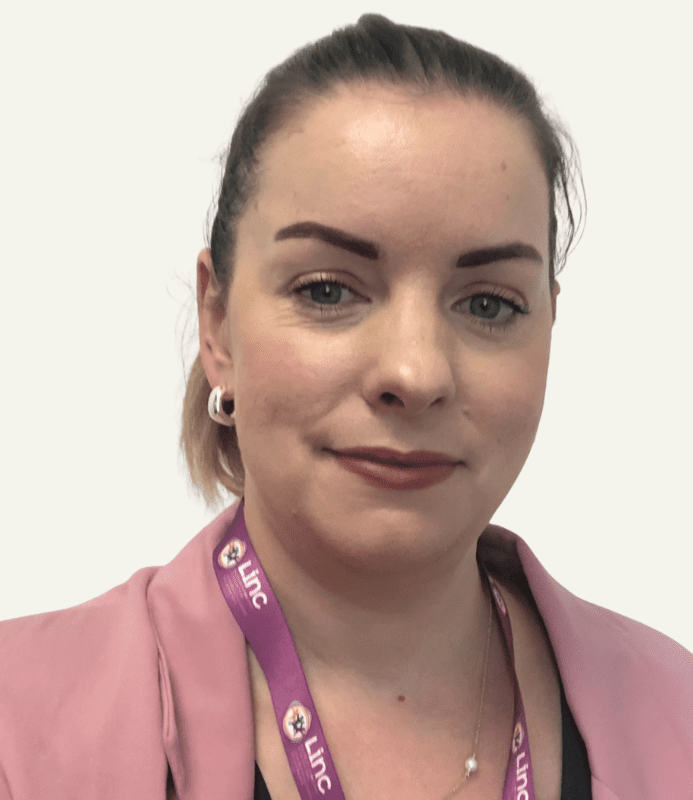
Claire Butterly
National Coordinator, LINC Programme
She holds a Master of Arts in Child, Youth and Family Studies and a Bachelor of Arts in Early Childhood Education and Care, both from IT Carlow, as well as a Postgraduate Diploma in Mentoring, Management and Leadership from TU Dublin.
Claire’s career spans a wide range of roles within early childhood settings, including working as an Early Years Quality Mentor and a tutor on Early Childhood Education and Care programmes. From 2016 to 2021, Claire contributed to the LINC Programme as a tutor. She subsequently took on the roles of Lead Content Developer and LINC+ CPD Programme tutor from 2021 to 2022.
Claire has completed a PhD through the Department of Reflective Pedagogy and Early Childhood Studies. Her doctoral research explored the recruitment, role and function of educators funded through the Access and Inclusion Model.
Her research interests include the development and professionalisation of the early childhood sector, inclusion in early childhood settings and amplifying the voices of students and educators in shaping policy and practice. Through her work, Claire is committed to fostering a more inclusive and effective Early Childhood Education and Care system that responds to the diverse needs of children, educators and families across Ireland.
You may also like:
Teaching Has No Borders: How Adaptability Helped Me Continue My Passion
Teaching Has No Borders: How Adaptability Helped Me Continue My Passion In this edition of the LINC Blog, Isabel Prieto shares how her passion for teaching travelled with her from Mexico to Ireland. Drawing on more than 14 years of experience, Isabel reflects on...
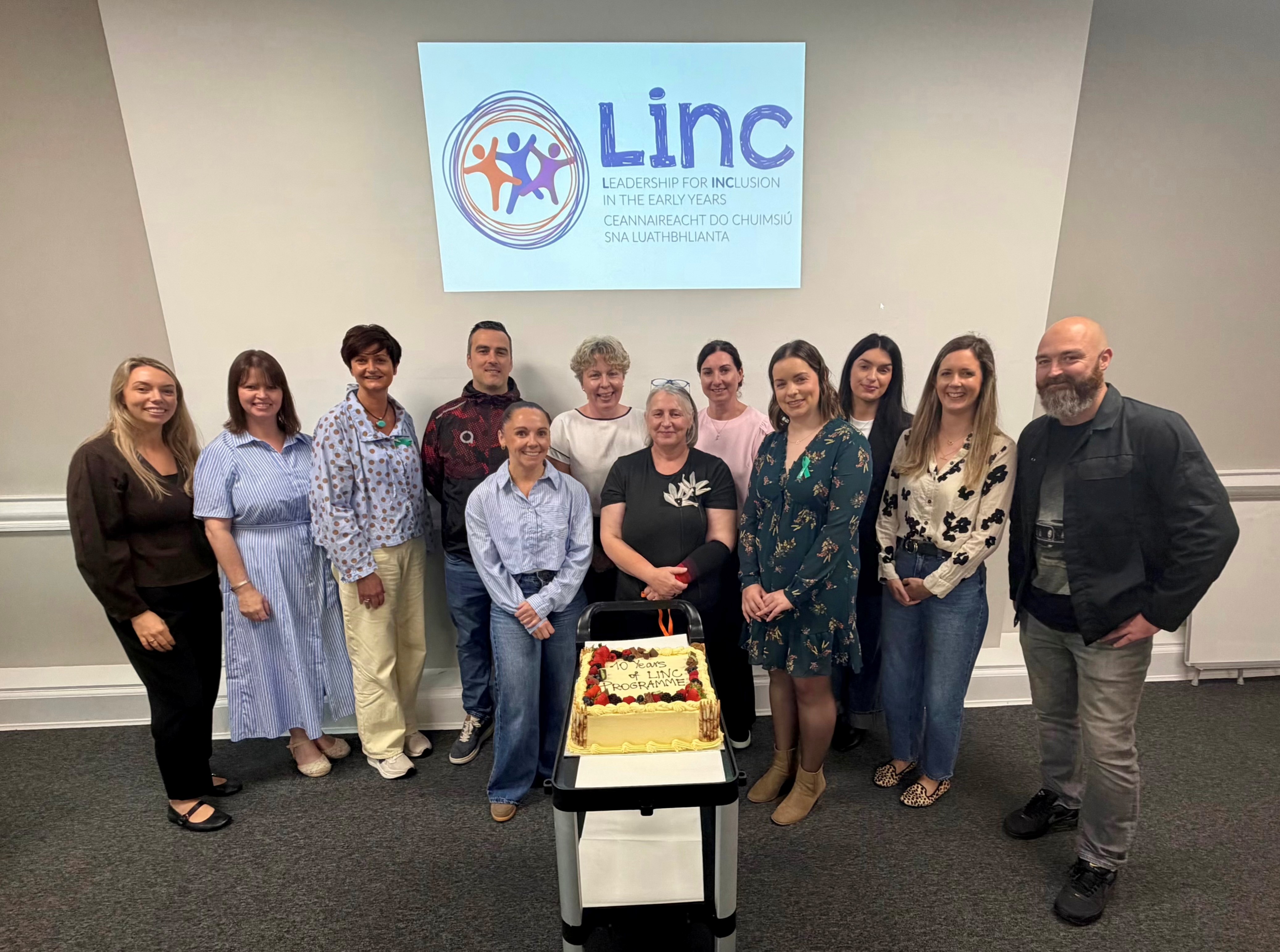
A Decade of Inclusion: Leadership for INClusion (LINC) Programme Celebrates 10 Years
A Decade of Inclusion: Leadership for INClusion (LINC) Programme Celebrates 10 YearsPictured : Current and former members of the LINC team pictured together to mark 10 years of the Leadership for Inclusion (LINC) Programme. From its first cohort in 2016 to a community...
The LINC Programme and Mary Immaculate College Join Ireland in Conversation for Shine’s 2026 Green Ribbon Campaign
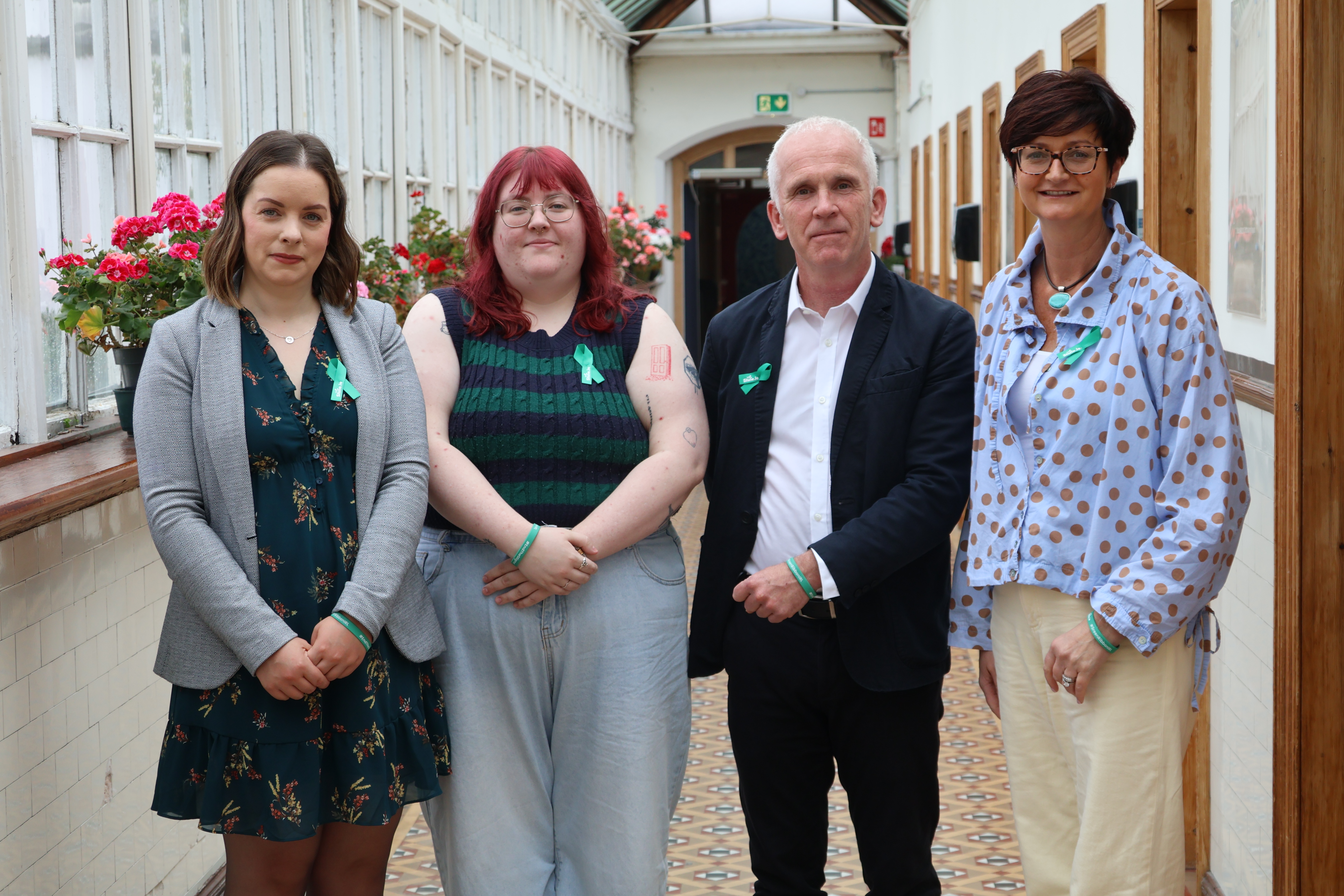
The LINC Programme and Mary Immaculate College Join Ireland in Conversation for Shine’s 2026 Green Ribbon CampaignPictured (L–R): Claire Butterly, LINC National Coordinator; Nat Horan, MISU President; Professor Dermot Nestor, President of Mary Immaculate College; and...