
Play as a Vehicle for Inclusion
International Day of Play takes place annually on 11 June and serves as a reminder of the importance of protecting every child’s right to play. In this reflective blog, Claire explores how play can support participation, belonging, communication and meaningful engagement for all children. Drawing on Aistear, Síolta and the LINC Competency Framework, she highlights the role of inclusive, responsive and intentional play experiences in creating environments where every child feels valued, supported and included.
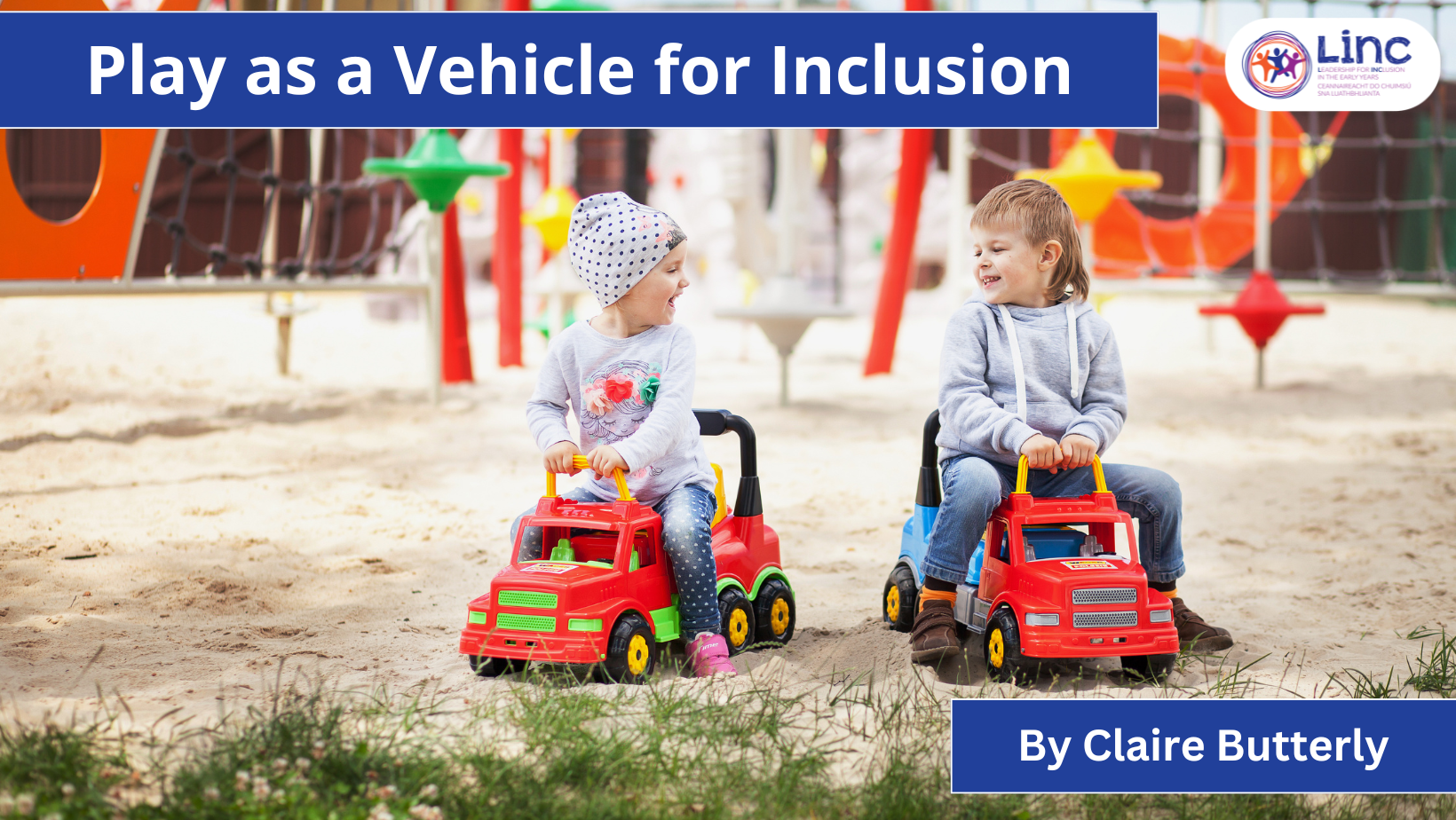
Play as a Vehicle for Inclusion
Play is not simply an activity in Early Learning and Care (ELC) and School-Age Childcare (SAC) settings; it is a powerful vehicle for inclusion. Through play, children explore identity, build relationships, express emotions and participate in meaningful learning. When thoughtfully supported, play removes barriers and creates space for all children to belong, engage and thrive.
Aistear (Government of Ireland (GoI) 2024) positions play at the centre of children’s learning and development across all themes, while Síolta (Department of Education and Skills (DES) 2017) highlights the importance of rich interactions and environments that support active, child-centred learning. The Diversity, Equality and Inclusion Charter and Guidelines (Department of Children and Youth Affairs (DCYA) 2016) emphasise that inclusion is realised when every child can participate meaningfully. Within the LINC Competency Framework (LINC Consortium 2016-2026), play and playful experiences are identified as key features of high-quality inclusive practice for all children. Play is recognised not as optional, but as fundamental to participation, engagement and belonging. Inclusive educators intentionally use play to ensure that every child can access meaningful learning experiences.
Play and Inclusion Across Childhood
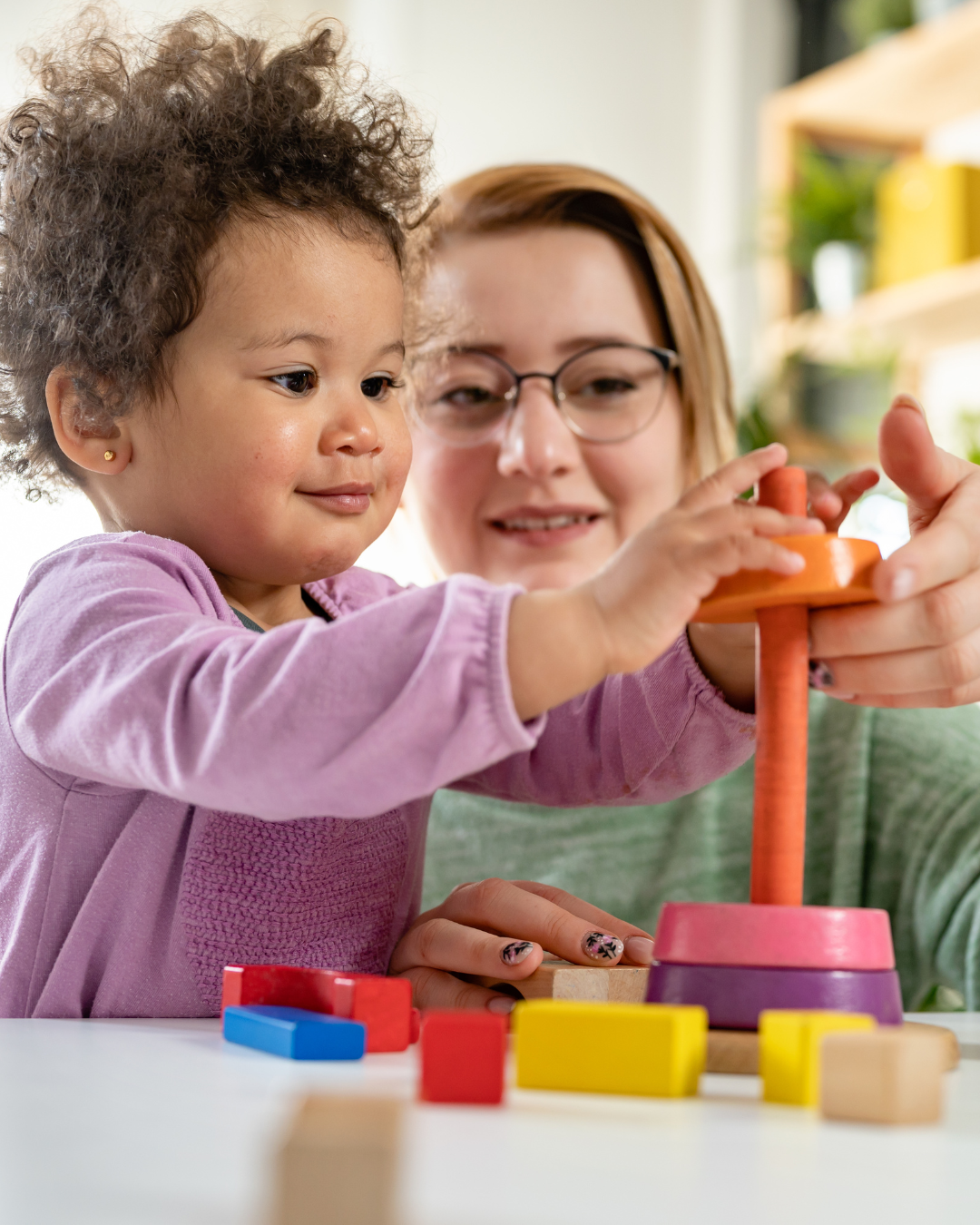
Across all ages, play is rooted in relationships and participation. For babies and toddlers, play is sensory, relational and exploratory. Responsive adults who follow children’s cues, mirror communication and provide safe, stimulating environments create inclusive opportunities for engagement. Small adaptations such as adjusting materials, offering visual supports or scaffolding interaction can make participation accessible for all children.
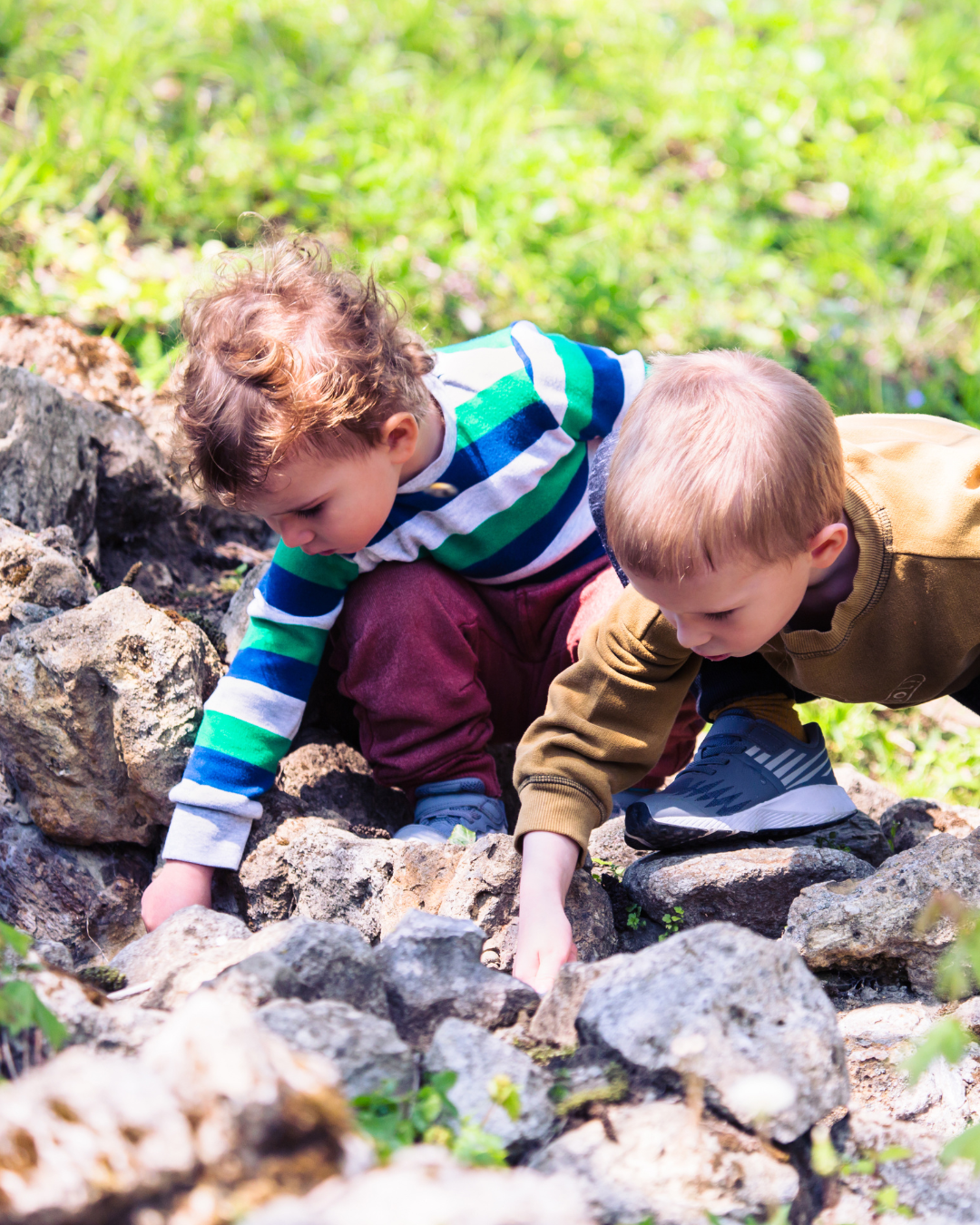
As children grow, play becomes increasingly social and imaginative. Through dramatic play, construction, creative arts and games, children negotiate roles, solve problems and develop empathy. Play offers multiple entry points: children can participate through language, gesture, observation, movement or shared materials. Inclusive environments recognise and value these varied forms of participation. While in school-age settings, play continues to support belonging, collaboration and regulation. Flexible activities, agency and choice and opportunities for leadership ensure that children with different strengths and abilities can engage meaningfully. Across all stages, inclusive play adapts to the child, not the other way around.


The Educator’s Role in Inclusive Play
Inclusive play requires intentional, reflective educators. It does not mean stepping back entirely; it means noticing, observing closely and responding thoughtfully. A strengths-based approach is essential. Instead of focusing on what a child cannot do, Inclusion Coordinators and educators can ask:
- How is this child trying to participate?
- What might be creating a barrier to participation?
- How can I adjust the environment or interaction?
This may involve modelling language, extending play ideas, pairing peers thoughtfully or adapting materials. The LINC Competency Framework (LINC Consortium 2016-2026) emphasises that inclusive educators intentionally design playful experiences that support participation, agency and positive peer relationships.
Play as a Space for Identity and Belonging
Play is one of the primary ways children explore identity. Through storytelling, role play and creative expression, children draw on their funds of knowledge from home, family and community. When these experiences are recognised and reflected in play materials and conversations, children feel seen and valued. Embedding diverse and authentic representation across cultures, abilities, languages and family structures ensures that play becomes a space where difference is respected and celebrated. As emphasised in the Diversity, Equality and Inclusion Charter and Guidelines (DCYA 2016), inclusion must be embedded in everyday practice rather than treated as an occasional focus.
Play as Ongoing Inclusive Practice
Inclusion through play is an ongoing process of reflection and adaptation. Inclusion Coordinators and Educators continually consider:
- Who is fully participating?
- Who may be marginalised or excluded?
- What adjustments could strengthen inclusion?
When play is intentionally supported, it becomes a powerful equaliser offering every child opportunities to belong and meaningfully participate.
Play is not separate from inclusion. It is one of its strongest expressions. Through play, children do not simply learn; they belong.
References
Department of Children and Youth Affairs (DCYA) (2016) Diversity, Equality and Inclusion Charter and Guidelines for Early Childhood Care and Education, available: https://aim.gov.ie/app/uploads/2021/05/Diversity-Equality-and-Inclusion-Charter-and-Guidelines-for-Early-Childhood-Care-and-Education.pdf
Department of Education and Skills (DES) (2017) Síolta: The National Quality Framework for Early Childhood Education, available: https://www.siolta.ie/pdfs/siolta-manual-2017.pdf
Government of Ireland (GoI) (2024) Aistear: The Early Childhood Curriculum Framework, available: https://www.curriculumonline.ie/getmedia/1e9e4eff-5d44-4950-bfa6-a28f43895d3f/Aistear-FW-ENG.pdf
LINC Consortium (2026) LINC Competency Framework; Limerick: LINC Programme
Claire Butterly
National Coordinator, LINC Programme
She holds a Master of Arts in Child, Youth and Family Studies and a Bachelor of Arts in Early Childhood Education and Care, both from IT Carlow, as well as a Postgraduate Diploma in Mentoring, Management and Leadership from TU Dublin.
Claire’s career spans a wide range of roles within early childhood settings, including working as an Early Years Quality Mentor and a tutor on Early Childhood Education and Care programmes. From 2016 to 2021, Claire contributed to the LINC Programme as a tutor. She subsequently took on the roles of Lead Content Developer and LINC+ CPD Programme tutor from 2021 to 2022.
Claire has completed a PhD through the Department of Reflective Pedagogy and Early Childhood Studies. Her doctoral research explored the recruitment, role and function of educators funded through the Access and Inclusion Model.
Her research interests include the development and professionalisation of the early childhood sector, inclusion in early childhood settings and amplifying the voices of students and educators in shaping policy and practice. Through her work, Claire is committed to fostering a more inclusive and effective Early Childhood Education and Care system that responds to the diverse needs of children, educators and families across Ireland.
You may also like:
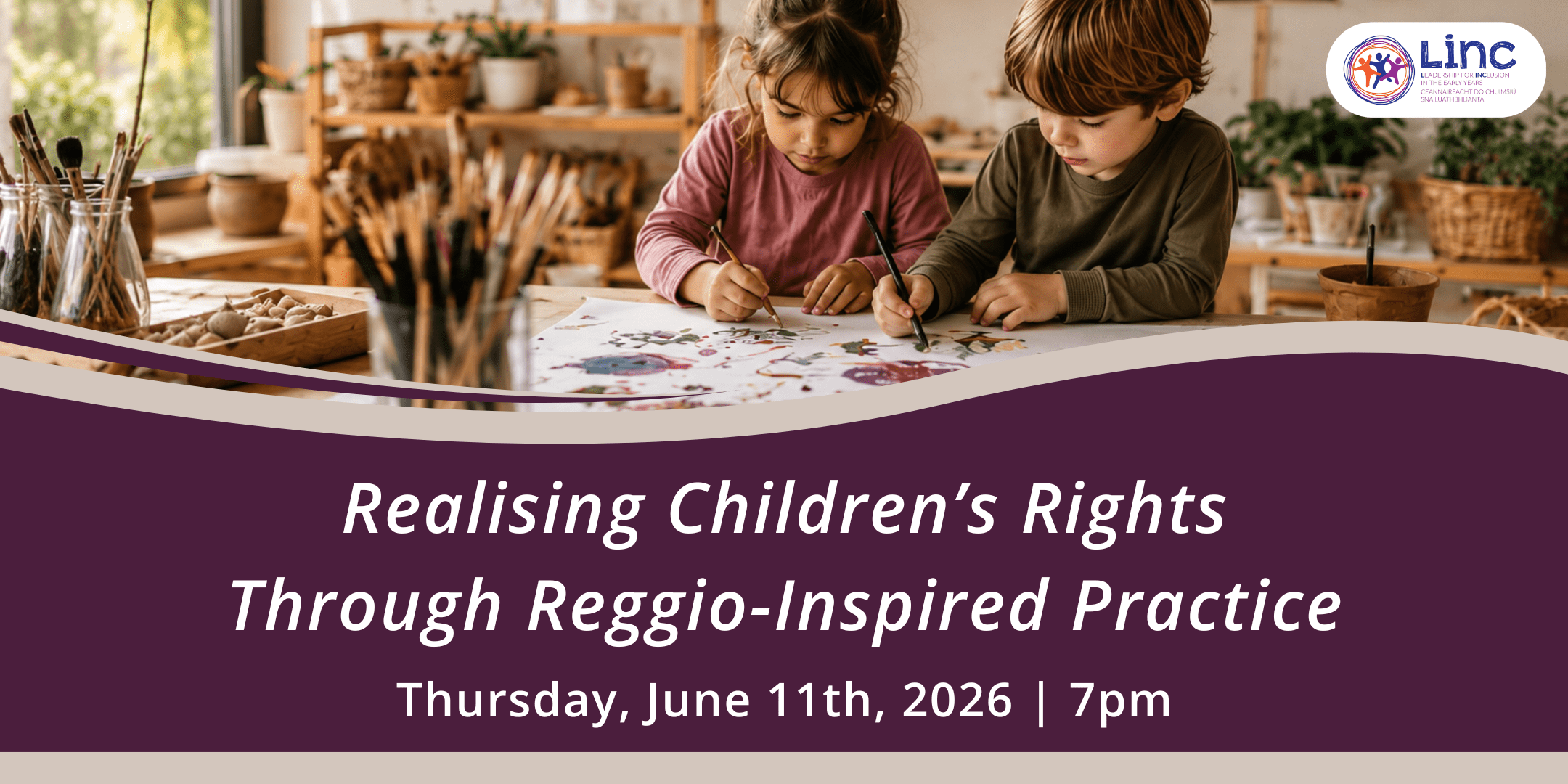
LINC Programme Hosts International Day of Play 2026 Event on Children’s Rights and Reggio-Inspired Practice
LINC Programme Hosts International Day of Play Event on Children's Rights and Reggio-Inspired PracticeThe Leadership for Inclusion in the Early Years (LINC) Programme recently hosted Realising Children's Rights Through Reggio-Inspired Practice, an online event marking...

Minister Norma Foley Welcomes Opening of Applications for Award-Winning LINC Programme 2026/2027 with 630 Places Available Nationwide
Minister Norma Foley Welcomes Opening of Applications for Award-Winning LINC Programme 2026/2027with 630 Places Available Nationwide Applications are now open for the Leadership for Inclusion in the Early Years (LINC) Programme 2026/2027, offering 630 early years...
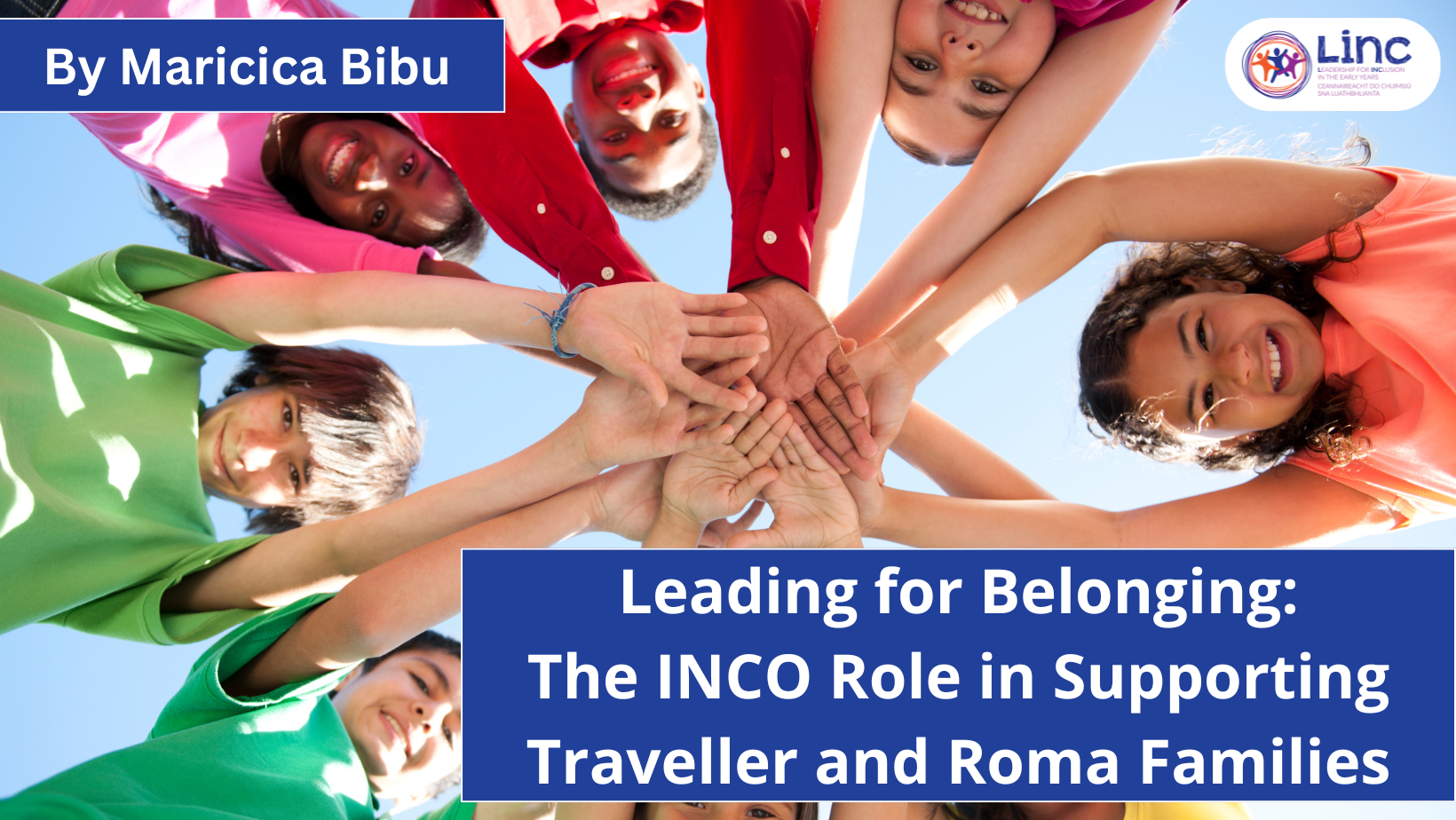
Leading for Belonging: The INCO Role in Supporting Traveller and Roma Families
Leading for Belonging: The INCO Role in Supporting Traveller and Roma Families In this edition of the LINC Blog, Former LINC Tutor Maricica Bibu explores the important role of the Inclusion Coordinator (INCO) in supporting Traveller and Roma children and families...