
Rethinking Inclusion in a Changing World:
What Does This Mean for Our Practice?
In this edition of the LINC Blog, LINC National Coordinator Dr. Claire Butterly reflects on what inclusion means in a changing world. Exploring how wider social circumstances shape children’s everyday experiences, she invites educators to consider the barriers children may encounter in their settings and how changes to our environments, routines and expectations can support every child’s participation and sense of belonging.
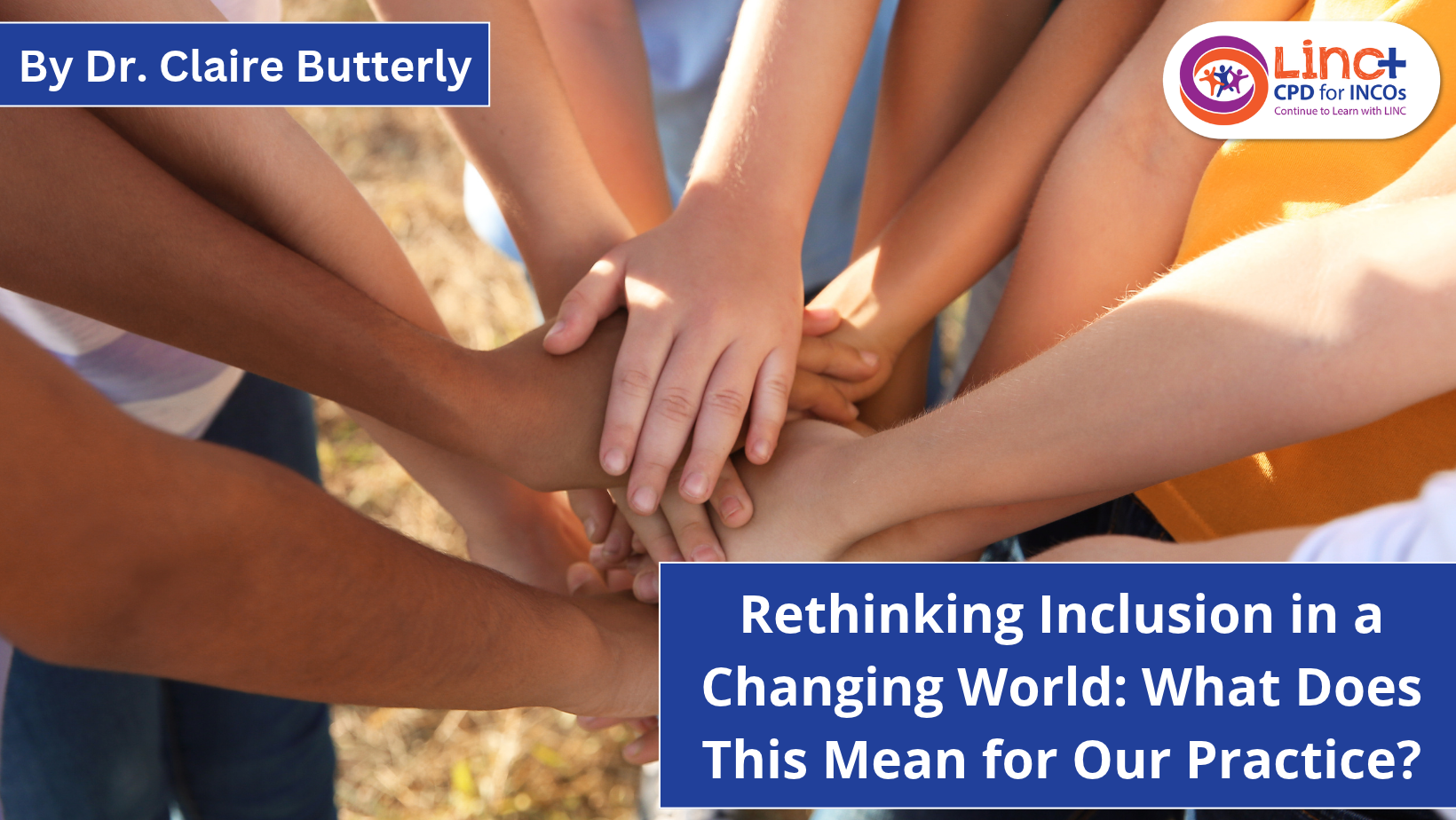
A lot can happen in ten years. Think about the world a child entering an early learning and care setting ten years ago was growing up in and compare it with the world children are experiencing today. In that time, we have lived through a global pandemic. We have witnessed war and international conflict resulting in families being displaced from their homes. In Ireland, children and families continue to experience homelessness and housing insecurity. Our settings also reflect an increasing diversity of languages, cultures, identities, abilities, family structures and life experiences. These might sometimes feel like issues that happen outside our early learning and care or school-age childcare settings.
But do they really stay outside?
Children don’t leave the wider world at the door
Bronfenbrenner’s ecological systems theory reminds us that children do not grow and develop in isolation. Children are influenced by the people, relationships, communities and wider society around them. What happens within their family matters. What happens within their setting matters. But so too do the wider circumstances within which children and families are living.
We saw this very clearly during COVID-19. Something happening at a global level quickly became part of children’s everyday lives. Settings closed, familiar routines changed, relationships with educators and peers were interrupted and opportunities for play and social interaction changed. The pandemic may have been a global event, but children experienced it in very individual ways. The same can be said about many of the circumstances children and families are experiencing today. Children don’t leave the wider world at the door when they enter our settings. And that gives us something important to think about when we consider inclusion.
What might a child be bringing through the door?
Consider a child whose family is experiencing homelessness or housing insecurity. What might their morning have looked like before they arrived at the setting? How easy is it to maintain routines when your living arrangements may be changing? How might this influence a child’s opportunities for rest, play or simply having their own space and belongings?
Now think about a child who has recently arrived in Ireland with their family. They may be becoming familiar with a new home and community while also entering a new early learning and care or school-age childcare setting. They may be hearing and using different languages and becoming familiar with different routines and expectations.
Of course, we cannot make assumptions about a child simply because we know something about their circumstances. But we can remain curious. We can take time to understand the child in front of us and the experiences, relationships, strengths and circumstances that form part of their world.
Does this change how we think about inclusion?
Perhaps it should. Inclusion has often been closely associated with disability or additional needs. Supporting the inclusion of children with disabilities remains hugely important. But our understanding of inclusion also needs to recognise that children can experience barriers to participation and belonging in many different ways.
- A barrier might relate to areas of need
- It might relate to language or communication.
- It might relate to culture, identity or family circumstances.
- It might relate to poverty or displacement.
But sometimes, the barrier might be within our own environment, routines or expectations.
And this is where I think some really useful questions begin to emerge.
- Who is participating here?
- Who might be on the edge of play?
- Whose voices do we hear most often?
- Whose language, culture and family are reflected within the environment?
- Is there a child who regularly finds a particular routine difficult?
- Are there ways of participating that we value more than others?
And perhaps most importantly: What could we do differently?
Turning the lens towards our own practice. When a child is finding something difficult, it can be very easy to begin by looking at the child.
- What support does this child need?
- What strategy could we use?
- How can we help them manage this routine?
These can be important questions. But inclusive practice also asks us to turn the lens in another direction.
- What is it about this routine that isn’t working for this child?
- Could we provide more flexibility?
- Could the environment be changed?
- Could we communicate in another way?
- Could the child participate differently?
- Is there something about our expectations that we need to reconsider?
Sometimes a relatively small change in our practice can make a significant difference to a child’s opportunity to participate. And sometimes the thing that needs to change is not the child at all.
Inclusion is something we keep working at
The world children are growing up in will continue to change.
We don’t know what children’s lives will look like ten years from now, what challenges families may experience or what new questions will emerge for educators. That means our understanding of inclusion cannot stand still either. We need to remain willing to listen, notice, question and reflect. And perhaps we also need to become comfortable with the idea that there will always be more to learn.
So rather than asking ourselves: “Is my setting inclusive?”
Perhaps a more useful question is: “Who might still be experiencing a barrier here?”
And then: “What could we do differently?”
Those two questions may lead to some of the most important conversations we have about inclusion.
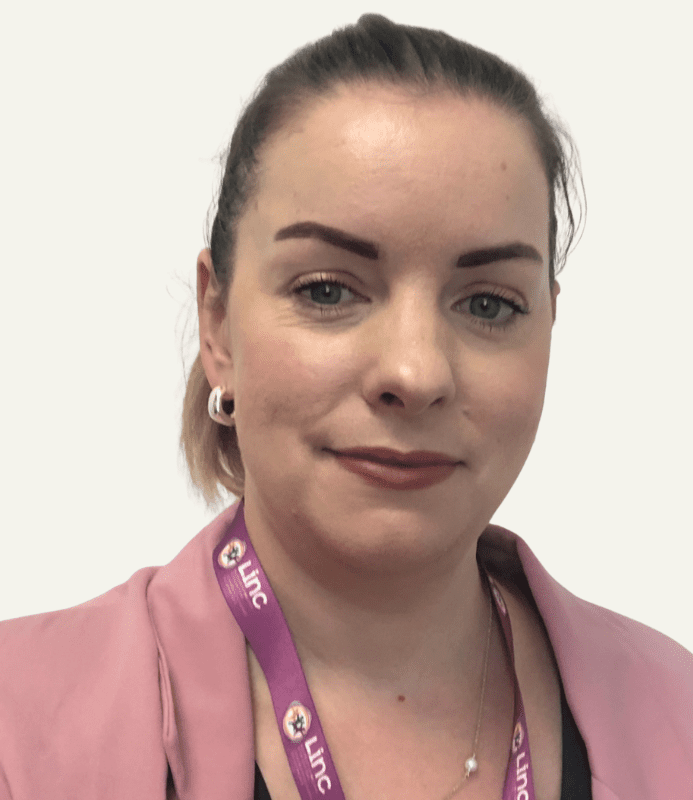
Dr. Claire Butterly
National Coordinator, LINC Programme
With a strong academic background and extensive practical experience in Early Childhood Education and Care, Claire is deeply committed to advancing inclusion and professional development within the sector.
She holds a Master of Arts in Child, Youth and Family Studies and a Bachelor of Arts in Early Childhood Education and Care, both from IT Carlow, as well as a Postgraduate Diploma in Mentoring, Management and Leadership from TU Dublin.
Claire’s career spans a wide range of roles within early childhood settings, including working as an Early Years Quality Mentor and a tutor on Early Childhood Education and Care programmes. From 2016 to 2021, Claire contributed to the LINC Programme as a tutor. She subsequently took on the roles of Lead Content Developer and LINC+ CPD Programme tutor from 2021 to 2022.
Claire has completed a PhD through the Department of Reflective Pedagogy and Early Childhood Studies. Her doctoral research explored the recruitment, role and function of educators funded through the Access and Inclusion Model.
Her research interests include the development and professionalisation of the early childhood sector, inclusion in early childhood settings and amplifying the voices of students and educators in shaping policy and practice. Through her work, Claire is committed to fostering a more inclusive and effective Early Childhood Education and Care system that responds to the diverse needs of children, educators and families across Ireland.
You may also like:
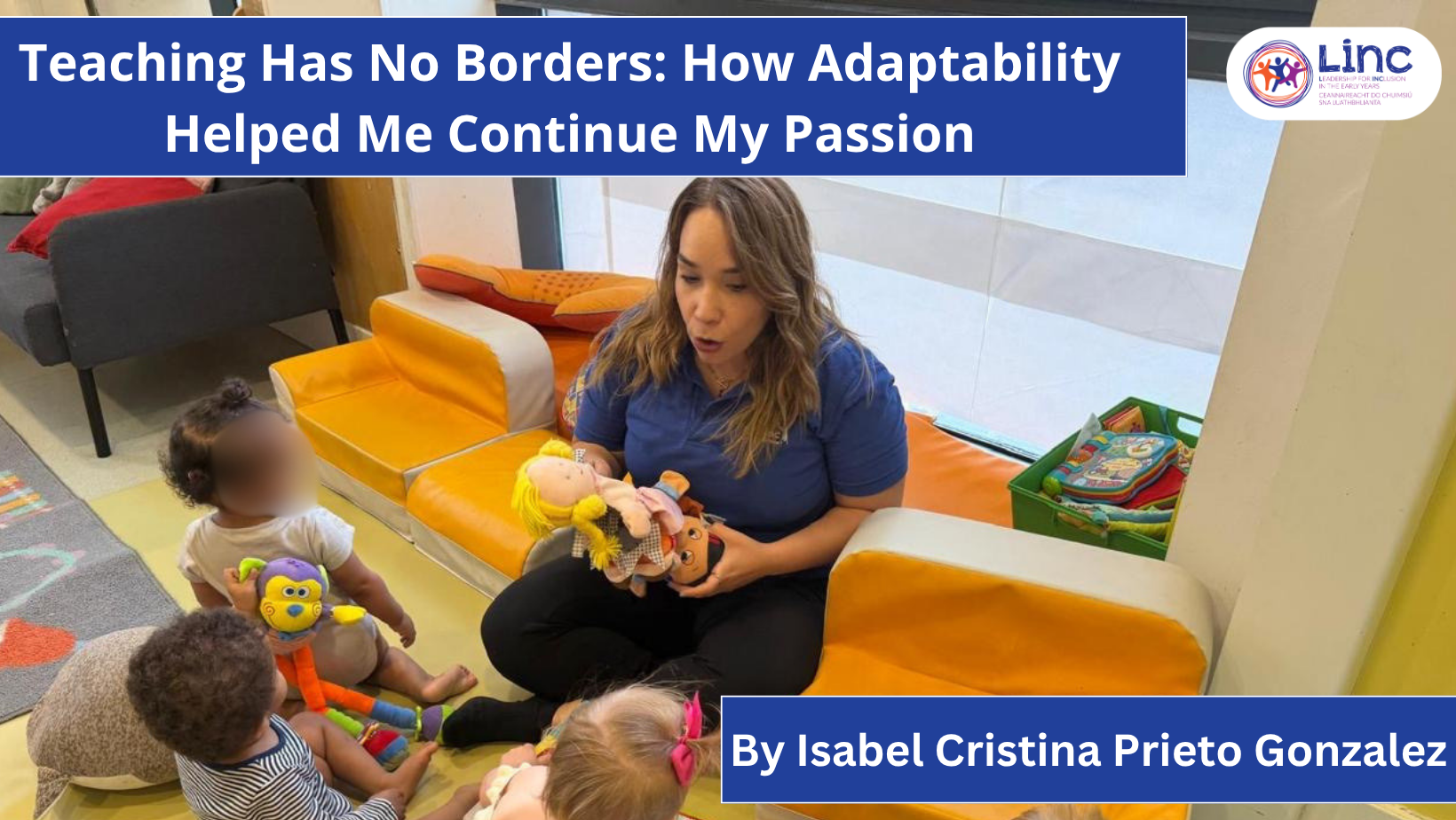
Teaching Has No Borders: How Adaptability Helped Me Continue My Passion
Teaching Has No Borders: How Adaptability Helped Me Continue My Passion In this edition of the LINC Blog, Isabel Prieto shares how her passion for teaching travelled with her from Mexico to Ireland. Drawing on more than 14 years of experience, Isabel reflects on...
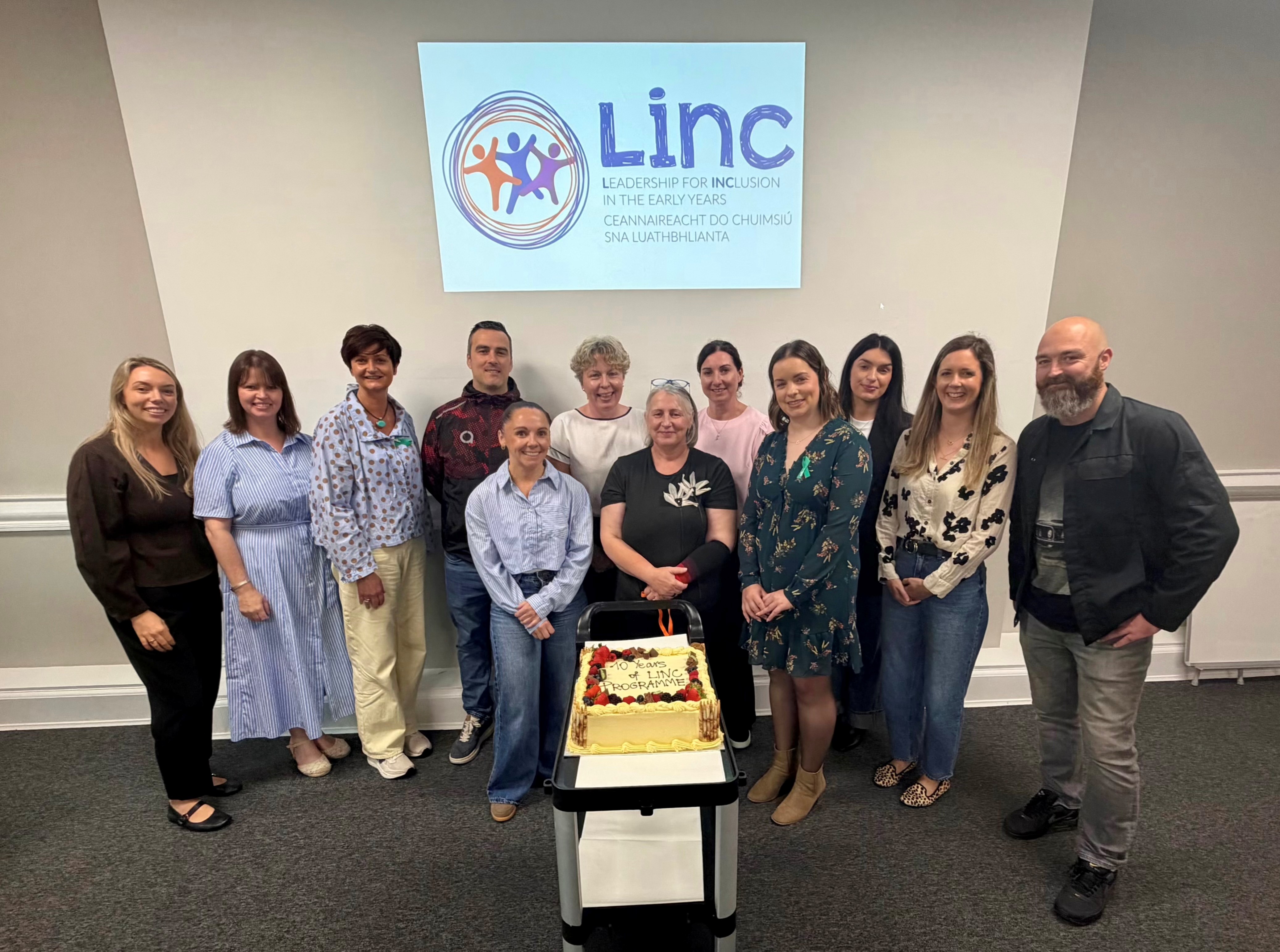
A Decade of Inclusion: Leadership for INClusion (LINC) Programme Celebrates 10 Years
A Decade of Inclusion: Leadership for INClusion (LINC) Programme Celebrates 10 YearsPictured : Current and former members of the LINC team pictured together to mark 10 years of the Leadership for Inclusion (LINC) Programme. From its first cohort in 2016 to a community...
The LINC Programme and Mary Immaculate College Join Ireland in Conversation for Shine’s 2026 Green Ribbon Campaign
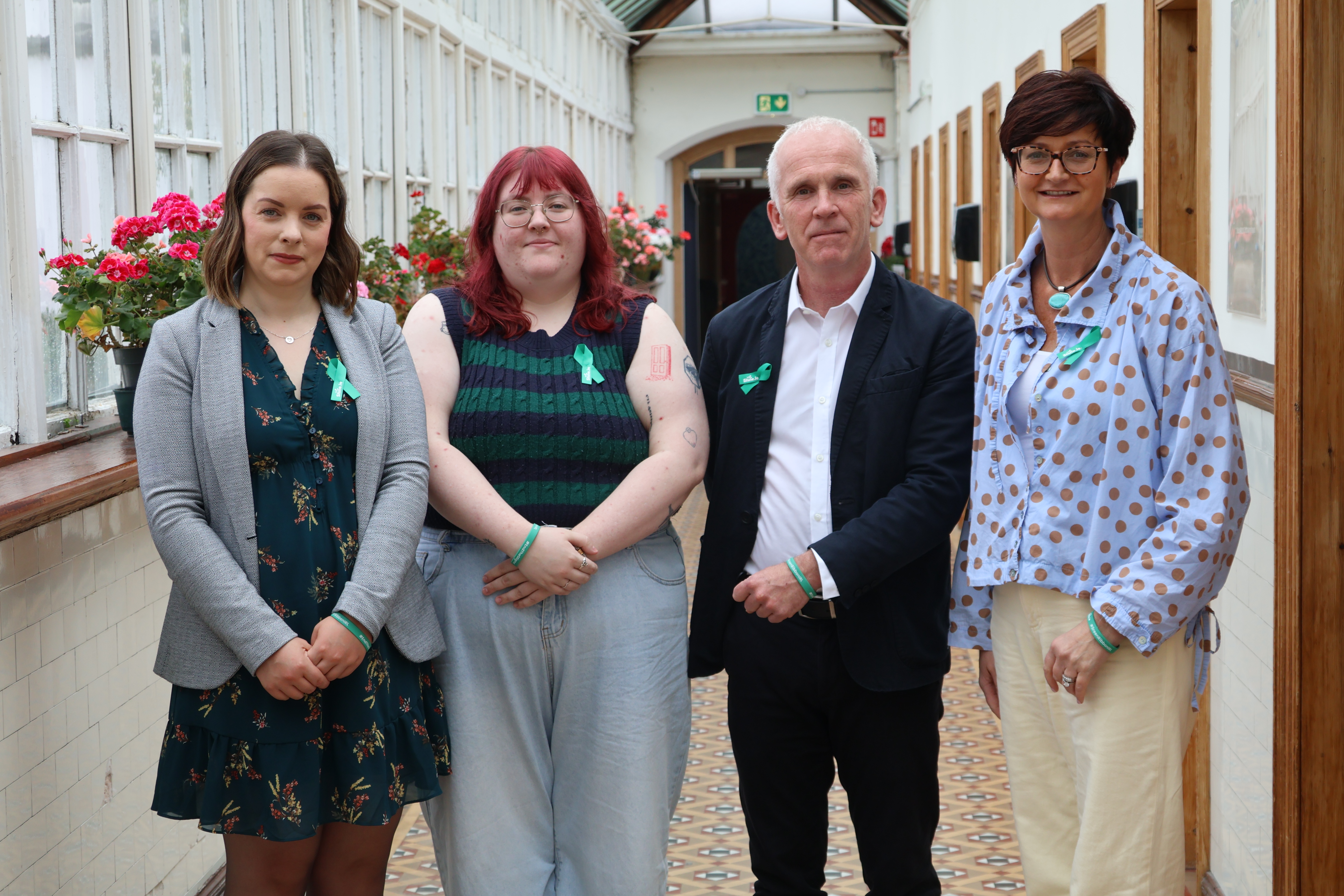
The LINC Programme and Mary Immaculate College Join Ireland in Conversation for Shine’s 2026 Green Ribbon CampaignPictured (L–R): Claire Butterly, LINC National Coordinator; Nat Horan, MISU President; Professor Dermot Nestor, President of Mary Immaculate College; and...