
Strengthening Collaborative Practice Through a Structured Communication Journal
In this edition of the LINC Blog, LINC student Sarah-Rose Moloney reflects on how a simple yet effective change to communication practices within her Early Learning and Care setting helped to strengthen collaborative partnerships between educators, families, and external professionals. Drawing on the principles of Aistear and Síolta, Sarah-Rose shares how the introduction of a structured communication journal created more meaningful opportunities for information sharing, supported children’s participation and wellbeing, and fostered a stronger sense of connection between all those involved in supporting children’s learning and development.
When reflecting on collaborative practice within my Early Learning and Care (ELC) setting, I identified that communication between educators, parents, and other stakeholders was inconsistent and, at times, ineffective. Within our setting, we support young children with a wide range of individual needs and varying levels of support. Many children access additional services, including speech and language therapy, occupational therapy, and other multidisciplinary supports. This includes autistic children, children with complex or medical needs, and children who are currently awaiting assessment.
Partnership with families is recognised as a key component of quality practice within both Aistear (GoI 2024) and Síolta (DES 2017), which emphasise the importance of meaningful communication and collaboration in supporting children’s learning, development, wellbeing, and inclusion. However, upon reflection, I recognised that our existing communication systems were not always achieving this goal.
While communication journals had previously been introduced, they lacked structure and clarity. With minimal guidance, parents were often unsure of what information was necessary to share. This sometimes led to limited engagement from both parents and educators, or alternatively, overly detailed entries that were not always relevant or useful. Information was often communicated quickly during busy morning transition periods, and there was no direct communication between educators, parents and external professionals. As a result, parents were often placed in the role of intermediary and did not always feel confident relaying information on behalf of the setting.
To address this, I decided to introduce a structured communication journal template as a practical tool to strengthen true collaborative practice. The communication journal was redesigned to provide a clear, accessible, and balanced template that supports meaningful contributions from all stakeholders, while avoiding unnecessary or excessive information.
Before implementing the journal, I consulted with colleagues and shared a draft version for feedback. Together, we identified that the template needed to be simple, accessible and time efficient. We agreed that incorporating visual prompts would reduce barriers to engagement and make it easier for parents and educators to share key information quickly and effectively.
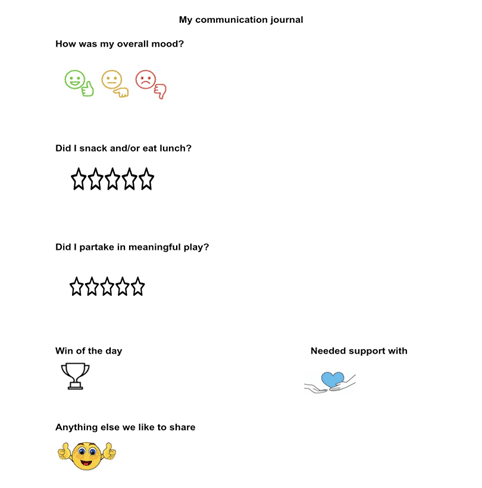
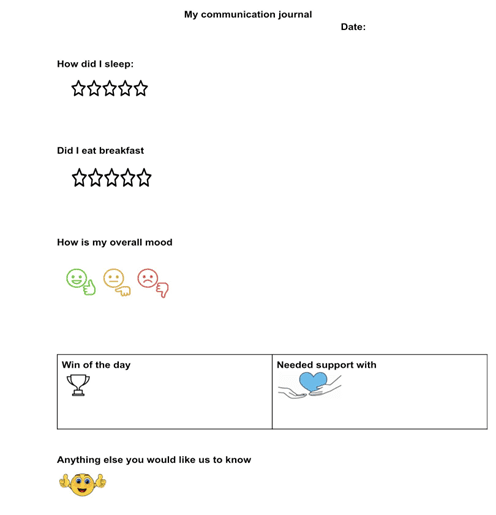
When designing the template, I considered the barriers identified through previous communication methods, particularly the value of information shared, time constraints, and ease of use. Visual prompts were incorporated throughout the journal, allowing parents and educators to quickly tick or circle responses while ensuring key information remained accessible. Space was also provided for additional comments where parents, guardians, or other professionals could share further information.
The journal was organised into three key sections, ensuring that parents, educators and external professionals could all contribute relevant information in a consistent and accessible way:
Parent section
- The child’s sleep and eating patterns
- Overall mood
- A “win of the day” to support a strengths-based approach
- Any areas where the child may need support
- Additional information they feel is important
Educator section
- The child’s mood within the setting
- Participation in snacks/lunch
- Engagement in meaningful play and learning experiences, aligned with Aistear
- A “win of the day”
- Areas requiring additional support
- Additional information the educators feel is important
Stakeholder section
- Name, role, and contact details
- Purpose of visit
- Observations on development
- Suggested strategies for educators
Parents appeared eager to engage with the journal and, within just a week, there was very positive feedback. Many families reported gaining greater insight into their child’s day and felt that both their own perspectives and their child’s voice were being heard and valued. Even parents who had previously not engaged with communication journals commented on the ease of use and the sense of connection they experienced through learning more about their child’s experiences within the setting.
Several weeks after implementation, one child attended a speech and language therapy appointment, and the Speech and Language Therapist (SLT) completed the stakeholder section of the journal. This sparked a conversation with the child in the setting about the appointment. The child’s face lit up as they shared details about the games they had played and the special puppet used during the session which was something they had never previously spoken about. The SLT also included observations regarding the child’s progress, along with practical strategies and adaptations that could be implemented within the setting. This provided valuable insight and informed our ongoing planning and support for the child. This experience demonstrated how the journal could act as a bridge between home, the early years setting, and external professionals, creating a shared understanding of the child’s strengths, progress, and support needs. It also reflected Bronfenbrenner’s Bioecological Systems Theory (2005), which highlights the importance of strong connections between the various environments that influence children’s development.
Overall, this initiative transformed communication into a more purposeful, balanced, and inclusive process, enabling stronger collaboration between children, families, educators, and external professionals. However, the experience also highlighted that meaningful change takes time and often requires ongoing reflection, adaptation, and evaluation. While feedback has been overwhelmingly positive, maintaining consistency across all stakeholders remains an ongoing consideration. Continued review of the journal will be necessary to ensure it remains meaningful, manageable, and responsive to the needs of children and families.
Most importantly, this experience reinforced the value of genuine partnership. When communication is accessible, purposeful, strengths-based, and inclusive of children’s voices, it creates a shared understanding that enables everyone to work together in supporting children’s learning, participation, wellbeing, and development.
References
Bronfenbrenner, U. (2005) Making human beings human: Bioecological perspectives on Human Development, Thousand Oaks, CA. Sage.
Government of Ireland (GoI) (2024) Aistear The Early Childhood Curriculum Framework, available: https://www.curriculumonline.ie/getmedia/1e9e4eff-5d44-4950-bfa6-a28f43895d3f/Aistear-FW-ENG.pdf
Department of Education and Skills (DES) (2017). Síolta: The National Quality Framework for Early Childhood Education. Dublin: Department of Education and Skills

Sarah-Rose Moloney
As her professional experience grew, this interest developed into a strong commitment to inclusion and advocacy. Sarah-Rose became a voice for children who required additional support, working to ensure that their needs were recognised and met. She was continually motivated to adapt learning experiences, environments and interactions to enable every child to participate meaningfully and experience a genuine sense of belonging.
This passion for inclusive practice led Sarah-Rose to further her education by completing a Postgraduate Certificate in Special and Inclusive Education in 2022. Through this qualification, she deepened her understanding of inclusive pedagogy and the importance of creating equitable learning opportunities for all children. Continuing her professional learning journey, she enrolled in the Leadership for Inclusion in the Early Years (LINC) Programme in 2026, further enhancing her knowledge and skills in supporting inclusion, diversity and equality within early childhood settings.
Sarah-Rose is committed to creating environments where every child is valued, respected and empowered to thrive.
You may also like:
The LINC Programme and Mary Immaculate College Join Ireland in Conversation for Shine’s 2026 Green Ribbon Campaign
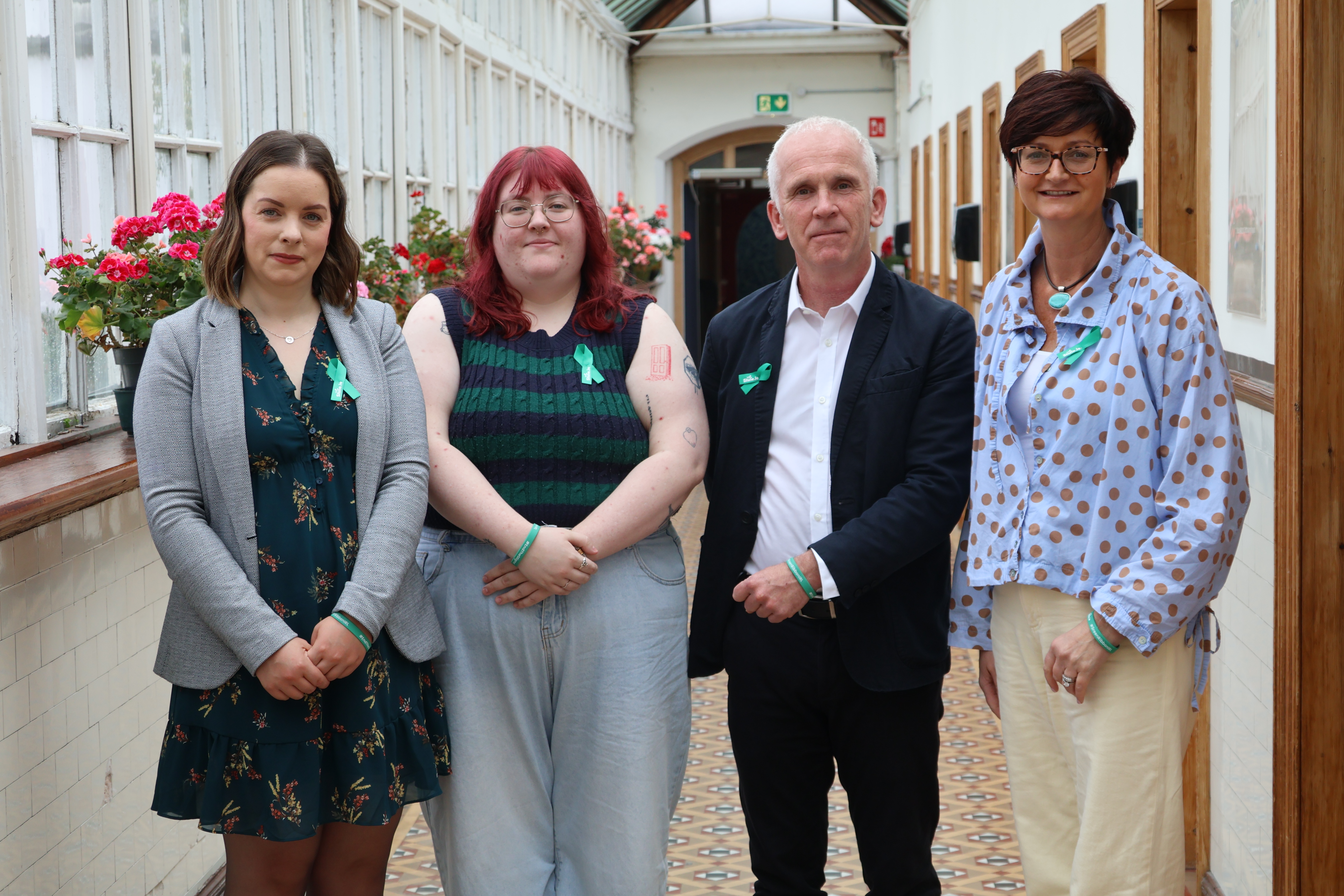
The LINC Programme and Mary Immaculate College Join Ireland in Conversation for Shine’s 2026 Green Ribbon CampaignPictured (L–R): Claire Butterly, LINC National Coordinator; Nat Horan, MISU President; Professor Dermot Nestor, President of Mary Immaculate College; and...
From Educator to Inclusion Leader: How Has Your INCO Identity Evolved?
From Educator to Inclusion Leader: How Has Your INCO Identity Evolved? In this edition of the LINC+ CPD Blog, Claire Butterly, National Coordinator of the LINC Programme, explores what it means to grow from educator to inclusion leader and how an INCO’s professional...
Why Transitions Matter More Than We Think
Why Transitions Matter More Than We Think In this edition of the LINC Blog, Ricardo Pereira Silva Filho, an early childhood educator with experience working in both Ireland and Brazil, reflects on the importance of transitions in Early Learning and Care and School-Age...