
From Reflection to Action: The Role of Mentoring in the LINC Journey
In this edition of the LINC Blog, Deputy Coordinator of the LINC Programme Ann Donnellan explores the role of mentoring in the LINC journey. As this year’s mentoring visits get underway, Ann shares how a visit to a student’s own setting creates space to step back from everyday practice, recognise what is working well and reflect on opportunities to strengthen inclusion. Through conversation with their mentor, students can turn those reflections into achievable actions for their setting. Ann also considers how the experience of being mentored can stay with LINC graduates as they take on the role of Inclusion Coordinator, supporting reflection and shared learning among their colleagues.
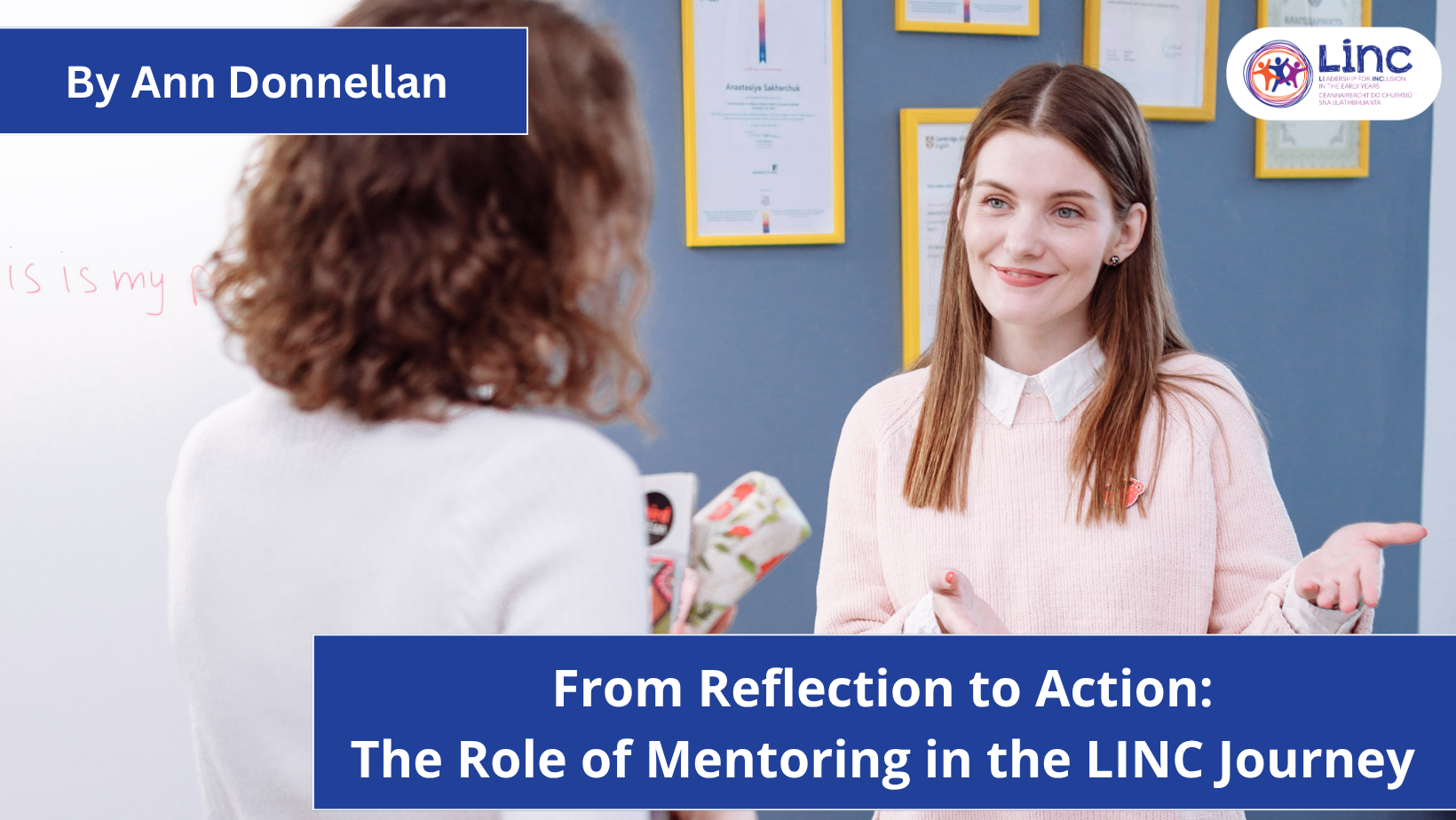
Throughout the Leadership for Inclusion in the Early Years (LINC) Programme, students engage with theory, reflect on inclusive practice and learn with and from each other. The mentoring visit provides a different kind of professional learning opportunity, bringing this learning directly into the student’s own Early Learning and Care and School-Age Childcare setting.
Each LINC student receives an individual mentoring visit within their setting, creating dedicated time and space to step back from everyday practice and reflect on inclusion within their own professional context. The conversation is grounded in what matters to them: the children and families they work with, their team, their environment and the opportunities and challenges they encounter in everyday practice.
At the heart of the LINC mentoring approach is reflection. The visit is not an inspection or assessment of the setting. Instead, it is a strengths-based professional conversation that begins with what is already working well and creates space for students to explore their inclusive culture, practice and pedagogy within their own context. The mentor’s role is not to arrive with the answers, but to listen, ask questions and support the student to explore their own thinking.
From Reflection to Action
The reflective process begins before the mentoring visit. In preparation, students complete the LINC Reflections on Inclusion document, a competency framework designed to support reflection on inclusive culture, practice and pedagogy. It encourages students to recognise their strengths while identifying aspects of practice they may wish to develop further.
These reflections provide a starting point for the mentoring conversation, which is shaped by the individual student and their professional context. Through listening, questioning and discussion, the mentor supports the student to explore their reflections and consider what they would like to take forward.
From here, reflection moves towards action. During the visit, the student begins their Action Plan, identifying meaningful and achievable actions to implement within their setting. Following the visit, they put these actions into practice and reflect on what worked well and the impact of these changes for children, families and the setting.
In this way, mentoring creates an ongoing cycle of reflection, action, implementation and further reflection, connecting professional learning with everyday practice.
Why Place Matters
One of the distinctive features of LINC mentoring is that it takes place within the student’s own setting. This allows the conversation to be grounded not only in the student’s reflections, but also in the context in which their everyday practice takes place.
During COVID-19, mentoring visits moved online, allowing this important element of LINC to continue. However, the experience also reinforced the value of being physically present in the student’s setting.
Being in the setting gives the mentor a richer understanding of the student’s professional context. The environment, routines and resources can become part of the professional conversation, supporting students to reflect on their practice within the space where that practice happens. Place, therefore, is more than simply where the mentoring visit takes place; it becomes part of the reflective process itself.
The Relationship at the Heart of Mentoring
While place provides an important context for reflection, the quality of the mentoring experience also depends on the relationship between the student and mentor.
Research into LINC mentoring identified the mentor–student relationship as a cornerstone of the mentoring experience (Donnellan 2020). Students valued mentors who listened, showed genuine interest in their setting and created space for them to talk openly about their practice. Importantly, they did not want mentors to arrive with quick-fix solutions, but valued opportunities to think through their own practice through professional conversation (Ibid.).
Trust and mutual respect are central to this relationship. They create the conditions for open dialogue, where students can recognise their strengths, explore challenges and consider different possibilities for their practice. Mentoring therefore becomes more than the sharing of advice or expertise; it is a process of reflection and shared learning shaped through conversation (Donnellan 2020; Moloney, Pope and Donnellan 2023).
Through this relationship, mentoring can create a bridge between learning about inclusion and leading inclusion in practice.
From Being Mentored to Becoming a Mentor
The influence of mentoring can extend beyond the visit itself. During their LINC mentoring visit, students experience a structured, strengths-based professional conversation in which someone listens, asks questions and creates space for them to reflect on their own inclusive culture, practice and pedagogy.
This experience becomes particularly important as LINC graduates move into their role as Inclusion Coordinators, where mentoring others can form part of how they lead inclusive culture, practice and pedagogy. Having experienced mentoring themselves, they can draw on this approach when supporting reflection and professional learning with colleagues.
Inclusion Coordinators do not need to position themselves as having all the answers. Instead, they can create opportunities for colleagues to reflect on practice, recognise their strengths, share perspectives and learn with and from one another. There is therefore a natural progression from being mentored to becoming a mentor, with an individual mentoring experience having the potential to influence professional learning across the wider setting.
Importantly, the learning within mentoring is two-way (Moloney, Pope and Donnellan 2023). Mentors also have an opportunity to listen to and learn from the experiences of students across a wide range of Early Learning and Care and School-Age Childcare settings. These conversations provide valuable insights into the realities of practice and help keep us connected to the educators and settings we support through LINC.
Beyond the Mentoring Visit
The formal mentoring visit takes place at one point in the LINC journey, but the reflection and professional learning it encourages can continue beyond the mentoring visit itself. A question during a team discussion, a shared observation or a conversation about a challenge can become an opportunity for colleagues to reflect, share perspectives and learn together. Over time, these everyday professional conversations can contribute to a culture where reflection and collaborative learning become part of how a team approaches inclusive practice.
As a new cycle of LINC mentoring visits begins this October, hundreds of individual mentoring conversations will take place in Early Learning and Care and School-Age Childcare settings across the country. Each will be shaped by a different student, a different setting and a different professional context. Yet at the heart of each is the same opportunity to pause, notice, reflect and consider what comes next.
References
Donnellan, A. (2020) An Exploration of How the Mentoring Component of the Leadership for Inclusion in the Early Years (LINC) Programme supports the Adult Learner. Limerick: Mary Immaculate College.
Moloney, M., Pope, J. and Donnellan, A. (2023) Professional Mentoring for Early Childhood and Primary School Practice. Switzerland: Springer.

Ann Donnellan
Deputy Coordinator, LINC Programme
Before joining the LINC team, Ann worked with Cork ETB as a tutor, delivering QQI Level 5 and 6 modules in Early Childhood Care and Education. She is deeply committed to advancing the professionalisation and upskilling of the early years sector, with a particular focus on mentoring in early childhood practice. Ann co-developed an innovative Level 8 Special Purpose Certificate in Professional Mentoring for Early Childhood Practice and co-authored the accompanying book, Professional Mentoring for Early Childhood Practice (Springer Nature, 2023).
Ann contributed to Leading Inclusion from the Inside Out: A Handbook for Parents and Early Childhood Teachers in Early Learning and Care, Primary and Special School Settings (Peter Lang, 2021) and co-authored the chapter Leading and Implementing Whole-Setting and Individual Planning. She has also played a key role in developing content for the LINC+ CPD programme, further supporting professional development in the sector.
You may also like:
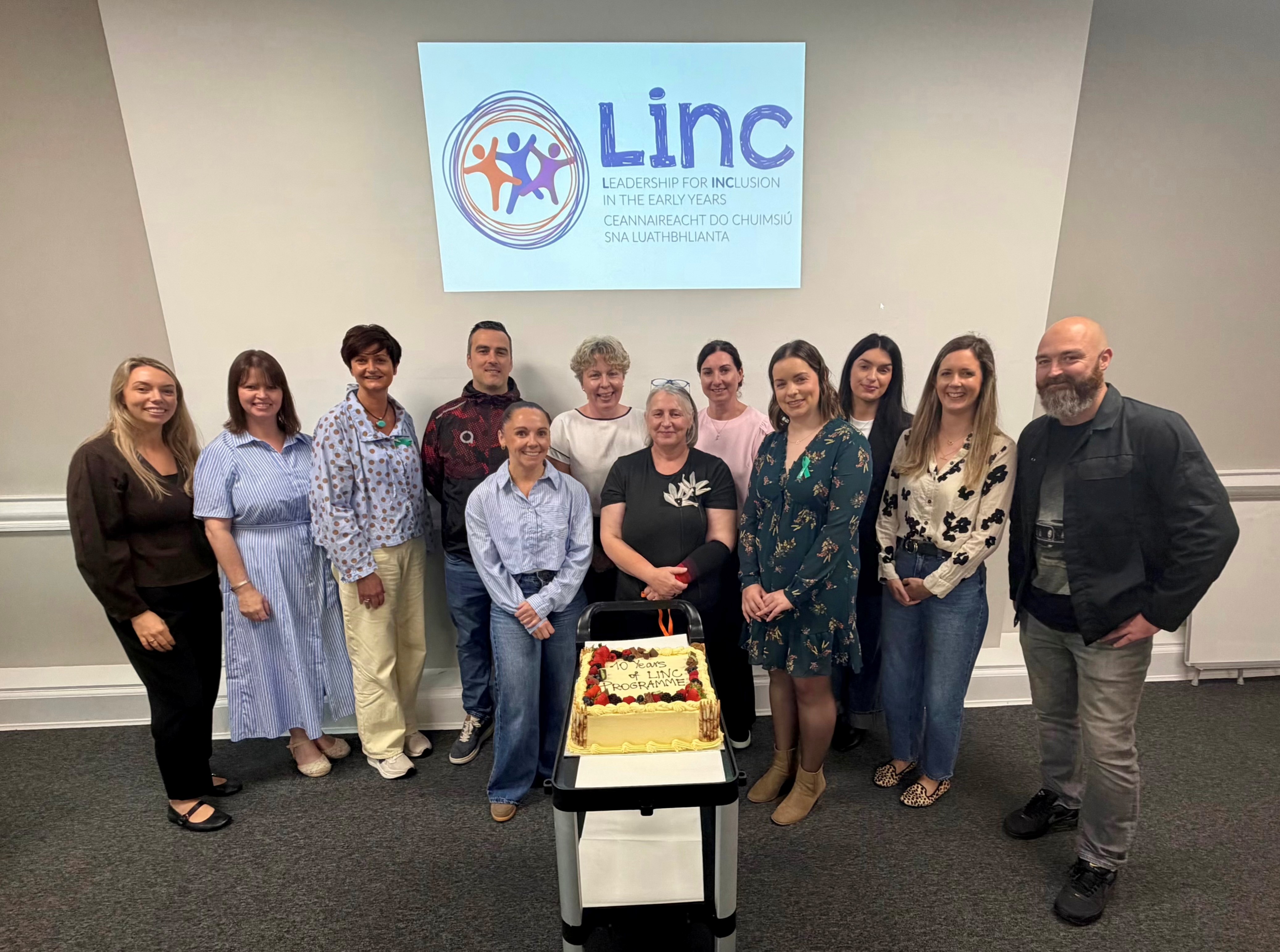
A Decade of Inclusion: Leadership for INClusion (LINC) Programme Celebrates 10 Years
A Decade of Inclusion: Leadership for INClusion (LINC) Programme Celebrates 10 YearsPictured : Current and former members of the LINC team pictured together to mark 10 years of the Leadership for Inclusion (LINC) Programme. From its first cohort in 2016 to a community...
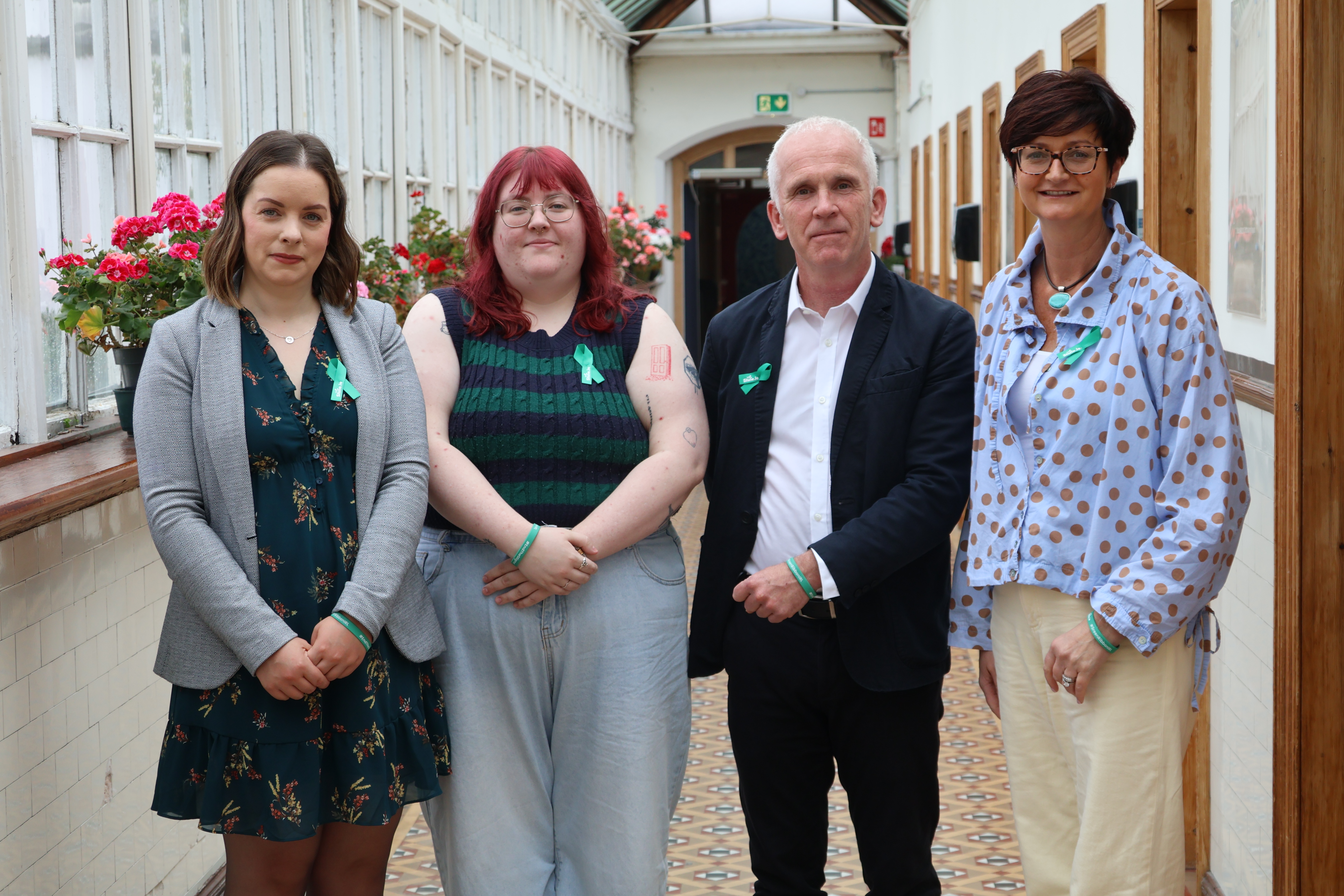
The LINC Programme and Mary Immaculate College Join Ireland in Conversation for Shine’s 2026 Green Ribbon Campaign
The LINC Programme and Mary Immaculate College Join Ireland in Conversation for Shine’s 2026 Green Ribbon CampaignPictured (L–R): Claire Butterly, LINC National Coordinator; Nat Horan, MISU President; Professor Dermot Nestor, President of Mary Immaculate College; and...
From Educator to Inclusion Leader: How Has Your INCO Identity Evolved?
From Educator to Inclusion Leader: How Has Your INCO Identity Evolved? In this edition of the LINC+ CPD Blog, Claire Butterly, National Coordinator of the LINC Programme, explores what it means to grow from educator to inclusion leader and how an INCO’s professional...