
Take the Lead. Plant the Seed. Start the Conversation.
In this edition of the LINC+ CPD Blog, Claire Butterly, National Coordinator of the LINC Programme, explores how Inclusion Coordinators can take the lead in establishing and nurturing a Community of Practice. Claire highlights how these communities can begin with something as simple as one question, a shared curiosity and an invitation for others to join the conversation. She reflects on the importance of creating space for educators to share their knowledge, consider different perspectives and learn from one another. The blog also offers practical prompts to help INCOs take that first step towards fostering meaningful professional conversations, collaborative learning and more inclusive practice.

Starting a Community of Practice does not have to begin with a formal plan, a large group of people or someone who has all the answers. Sometimes, it begins much more simply. Someone notices something in practice, asks a question and invites others to think about it with them. For an Inclusion Coordinator, that first conversation can be an important act of leadership.
Across Early Learning and Care and School-Age Childcare settings, educators encounter questions every day that are worth exploring together. We might notice that children are participating in an experience in different ways. A conversation with a family might prompt us to think differently about something we have been doing. A colleague might share an observation that challenges our assumptions. Sometimes, we simply find ourselves thinking, I wonder if there is another way of looking at this?
These moments can become the seeds of professional learning.
The temptation can be to feel that, before bringing others together, we need to know exactly what the Community of Practice will look like, what will be discussed and where the conversation will lead. However, Communities of Practice develop through participation. Their direction is shaped by the people involved, the questions that matter to them and the knowledge and experience they bring.
Taking the lead, therefore, does not mean taking control.
It can mean creating the conditions for others to participate. It can mean asking, What are we noticing? What are we wondering about? What would be useful for us to explore together? It can mean listening carefully when someone offers a different perspective and being willing to say, I don’t know, but perhaps we could think about that together.
This kind of leadership may feel quieter than the leadership we traditionally imagine, but it can be powerful.
Educators bring significant professional knowledge developed through their everyday relationships and experiences with children, families and colleagues. When there is space to share stories, ask questions and reflect together, that individual knowledge can become visible and contribute to shared professional learning.
The conversation does not always need to produce an immediate answer. Some of the most valuable professional conversations may leave us with better questions.
Over time, small things can begin to happen. Someone who initially preferred to listen may begin to share an observation. A question raised by one educator may connect with something another has been wondering about. Different perspectives may challenge assumptions that have quietly shaped practice. An idea explored together may be tried, revisited and developed. Gradually, a group of people talking about practice can become a community learning from practice.
This is also why sustaining a Community of Practice cannot rest with one person. An INCO might plant the seed and create the initial opportunity, but a meaningful Community of Practice develops when members begin to shape it together. Interests change, new questions emerge and people contribute in different ways at different times. Making space for this helps the community remain meaningful to the people within it.
Perhaps, then, the question is not: Am I ready to lead a Community of Practice?
A more useful question might be: What conversation could I start?
Think about your own setting or professional network. What have you been noticing? What are educators curious about? Is there a question that keeps returning? Is there an aspect of inclusive practice that would benefit from different perspectives?
That may be enough to begin. You do not need to know where the conversation will lead before you start it. You need curiosity, a willingness to listen and an invitation for others to join you.
Take the lead. Plant the seed. Start the conversation.
And see what you can learn together.
A Final Reflection
As you think about taking the next step:
- What question or area of practice would be worth exploring with others?
- Who could you invite into the conversation?
- How could you create space for different ways of participating?
- What could help the conversation remain curious rather than rushing towards solutions?
- What is one small action you could take to plant the seed for a Community of Practice?
Continuing Your Learning with LINC+
A Community of Practice does not need to begin with all the answers. It can begin with one question and an invitation to explore it together. As an INCO, you can create that opportunity—opening up a space for others to contribute, question, reflect and learn together.
If this has sparked your interest in Communities of Practice and you would like to develop your understanding further, consider joining LINC+. Through the programme, you can explore how Communities of Practice can support collaborative professional learning, inclusive practice and leadership while connecting and learning with other INCOs and LINC graduates.
Sometimes, taking the lead simply means being willing to start the conversation.
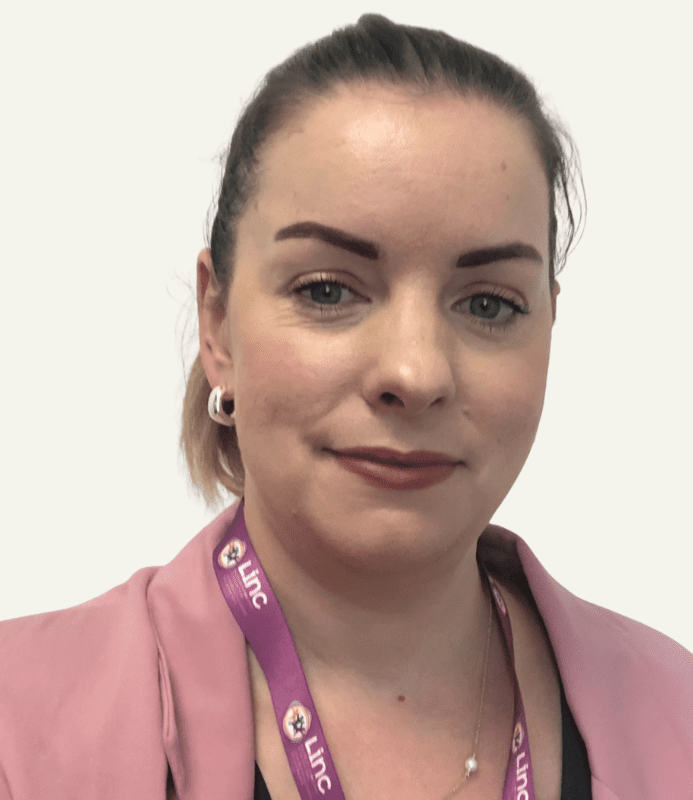
Claire Butterly
National Coordinator, LINC Programme
She holds a Master of Arts in Child, Youth and Family Studies and a Bachelor of Arts in Early Childhood Education and Care, both from IT Carlow, as well as a Postgraduate Diploma in Mentoring, Management and Leadership from TU Dublin.
Claire’s career spans a wide range of roles within early childhood settings, including working as an Early Years Quality Mentor and a tutor on Early Childhood Education and Care programmes. From 2016 to 2021, Claire contributed to the LINC Programme as a tutor. She subsequently took on the roles of Lead Content Developer and LINC+ CPD Programme tutor from 2021 to 2022.
Claire has completed a PhD through the Department of Reflective Pedagogy and Early Childhood Studies. Her doctoral research explored the recruitment, role and function of educators funded through the Access and Inclusion Model.
Her research interests include the development and professionalisation of the early childhood sector, inclusion in early childhood settings and amplifying the voices of students and educators in shaping policy and practice. Through her work, Claire is committed to fostering a more inclusive and effective Early Childhood Education and Care system that responds to the diverse needs of children, educators and families across Ireland.
You may also like:
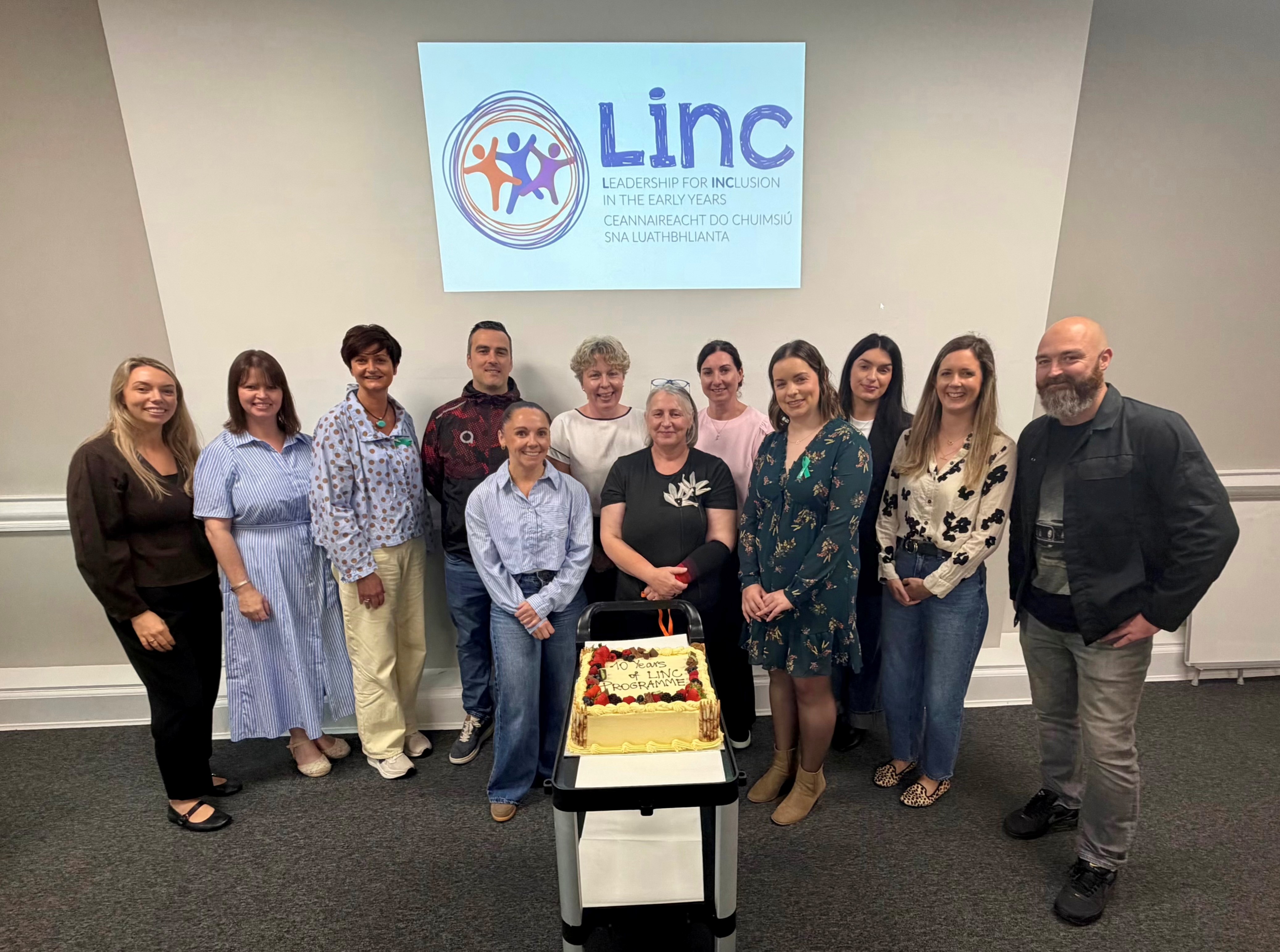
A Decade of Inclusion: Leadership for INClusion (LINC) Programme Celebrates 10 Years
A Decade of Inclusion: Leadership for INClusion (LINC) Programme Celebrates 10 YearsPictured : Current and former members of the LINC team pictured together to mark 10 years of the Leadership for Inclusion (LINC) Programme. From its first cohort in 2016 to a community...
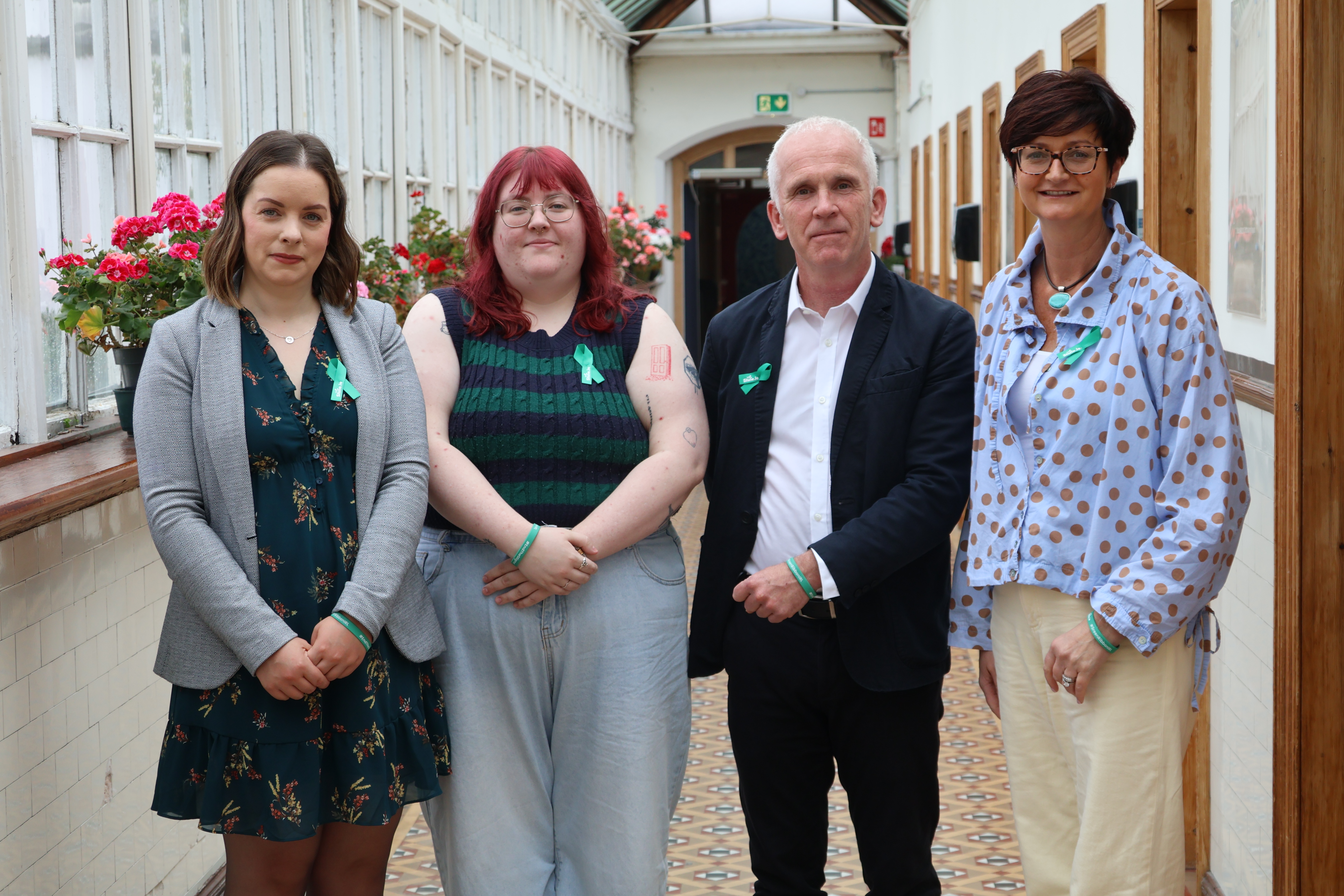
The LINC Programme and Mary Immaculate College Join Ireland in Conversation for Shine’s 2026 Green Ribbon Campaign
The LINC Programme and Mary Immaculate College Join Ireland in Conversation for Shine’s 2026 Green Ribbon CampaignPictured (L–R): Claire Butterly, LINC National Coordinator; Nat Horan, MISU President; Professor Dermot Nestor, President of Mary Immaculate College; and...

From Educator to Inclusion Leader: How Has Your INCO Identity Evolved?
From Educator to Inclusion Leader: How Has Your INCO Identity Evolved? In this edition of the LINC+ CPD Blog, Claire Butterly, National Coordinator of the LINC Programme, explores what it means to grow from educator to inclusion leader and how an INCO’s professional...